
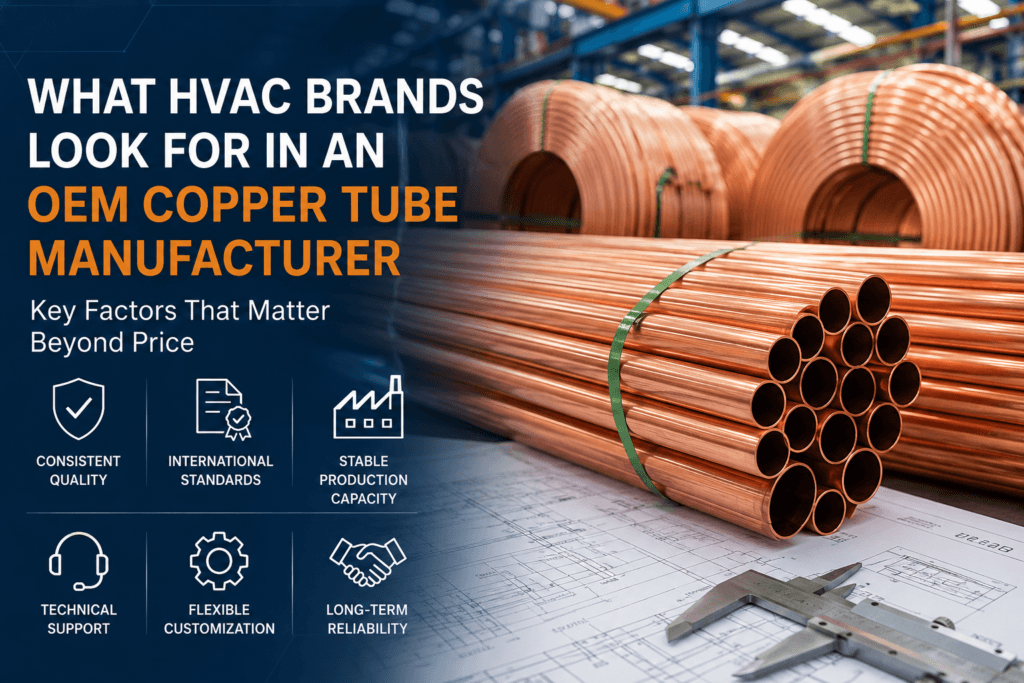
When an HVAC manufacturer starts looking for a new copper tube supplier, price is usually the first thing discussed—but rarely the deciding factor.
For most OEM buyers, the real concern is whether a supplier can support production consistently over the next three, five, or even ten years. A delayed shipment, unstable quality, or unexpected production issue can cost far more than a slightly higher purchase price.
That is why experienced HVAC brands evaluate suppliers differently from ordinary buyers.
Consistency Matters More Than Specifications
Most copper tube manufacturers can provide a datasheet.
The challenge is delivering the same quality across every shipment.
For OEM manufacturers, consistency is critical because production lines are designed around specific material requirements. Variations in wall thickness, cleanliness, hardness, or dimensional accuracy can affect production efficiency and product performance.
Before choosing a supplier, buyers often ask:
- Is product quality consistent between batches?
- How is quality monitored during production?
- Can testing reports be provided regularly?
The goal is not simply to meet specifications once, but to maintain them over time.
Can the Supplier Grow with Your Business?
Many supplier relationships work well at the beginning but become problematic when demand increases.
An OEM manufacturer may start with one container per month and later require multiple containers within the same period.
Before establishing a long-term partnership, buyers typically evaluate:
- Production capacity
- Lead time stability
- Ability to handle volume increases
- Supply continuity during peak seasons
A supplier that cannot scale may become a bottleneck for future growth.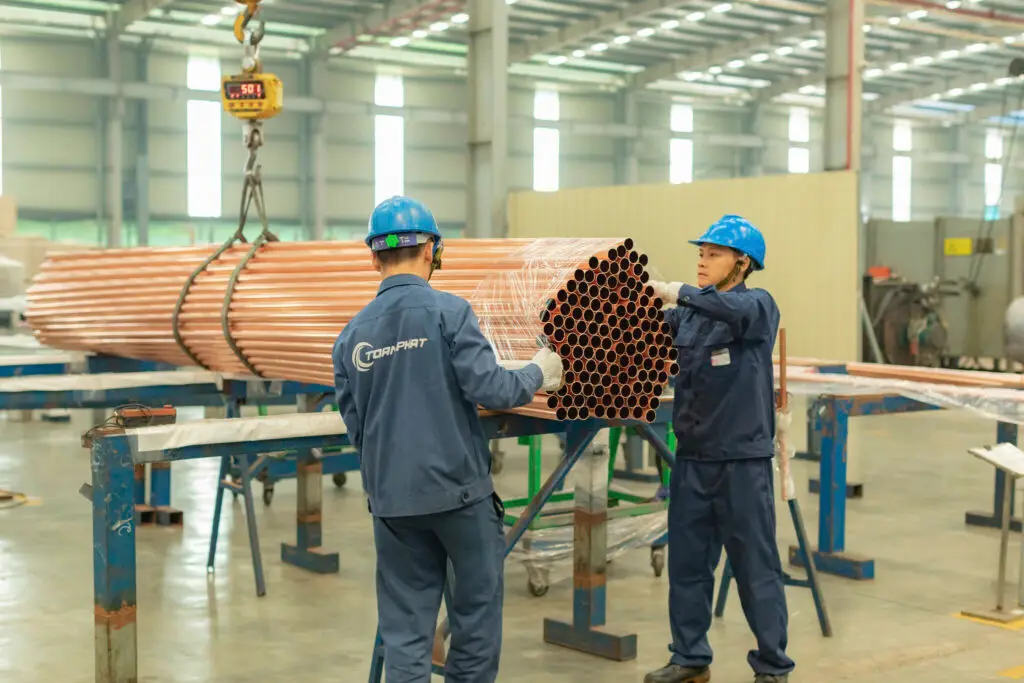
How Strong Is the Quality Management System?
Quality problems are expensive.
A single issue can affect production schedules, increase warranty claims, and damage customer trust.
Because of this, OEM buyers often focus less on marketing materials and more on actual quality control processes.
Key questions include:
- What inspections are performed during production?
- Are international standards followed?
- How are non-conforming products handled?
- Is product traceability available?
A strong quality management system reduces risk throughout the supply chain.
Does the Supplier Understand HVAC Applications?
Copper tubes used in HVAC systems are not generic industrial products.
Different applications may require different performance characteristics depending on system design, refrigerant type, operating pressure, and manufacturing processes.
Suppliers with experience in air conditioning, refrigeration, heat exchangers, and VRF/VRV systems are often better positioned to support OEM customers with practical recommendations and technical solutions.
What Happens When Problems Occur?
Every supplier can perform well when everything goes according to plan.
The real test comes when unexpected situations arise.
OEM buyers often pay close attention to:
- Response speed
- Technical support capability
- Communication efficiency
- Problem-solving approach
A reliable supplier is not one that never encounters challenges, but one that resolves them quickly and professionally.
Long-Term Value Over Short-Term Savings

Many purchasing teams initially focus on obtaining the lowest possible price.
However, experienced manufacturers understand that the total cost of ownership extends far beyond the purchase price.
Late deliveries, inconsistent quality, production interruptions, and additional inspections can quickly outweigh any short-term savings.
For this reason, many HVAC brands prioritize reliability, consistency, and long-term partnership potential when evaluating suppliers.
Final Thoughts
Choosing an OEM copper tube manufacturer is ultimately a risk management decision as much as a purchasing decision.
The most successful supplier relationships are built on consistent performance, dependable delivery, transparent communication, and the ability to support growth over time.
For HVAC and refrigeration manufacturers, these factors often create far greater value than simply choosing the lowest quotation.


