
The ASTM B280 standard is one of the world’s most recognized specifications for copper tubes used in air conditioning and refrigeration systems. Rather than referring to a specific copper tube product, it establishes the engineering, dimensional, mechanical, cleanliness, and quality requirements that manufacturers must meet to produce reliable copper tubes for HVAC&R applications.
For contractors, OEM manufacturers, distributors, and project owners, understanding the ASTM B280 standard is essential when selecting copper tubes that deliver long-term performance and comply with international engineering specifications.
This article explains the engineering requirements behind the standard and why manufacturers such as Ruby Copper invest in advanced production and quality control systems to comply with its requirements.
What Is the ASTM B280 Standard?
The ASTM B280 standard is an international specification published by ASTM International for seamless copper tubes intended for air conditioning and refrigeration field service.
Unlike general-purpose copper tube specifications, this standard focuses specifically on applications where refrigerant is circulated under pressure. Because of these demanding operating conditions, manufacturers must control every stage of production, from raw material selection to final inspection.
Copper tubes manufactured according to this standard are widely used in:
- Residential air conditioning systems
- Commercial HVAC installations
- VRF and VRV systems
- Refrigeration equipment
- Heat pumps
- Industrial cooling systems

Ruby Copper manufactures copper tubes in compliance with the ASTM B280 standard for HVAC and refrigeration applications.
The specification helps ensure compatibility with modern refrigerants while maintaining safe and efficient system performance.
Why the ASTM B280 Standard Matters
Meeting the ASTM B280 standard demonstrates that a manufacturer can consistently produce copper tubes suitable for demanding HVAC applications.
For engineers and contractors, compliance offers several important advantages:
- Reliable dimensional accuracy
- High mechanical strength
- Excellent leak resistance
- Clean internal surfaces
- Stable product consistency
- Easier installation
- Long service life
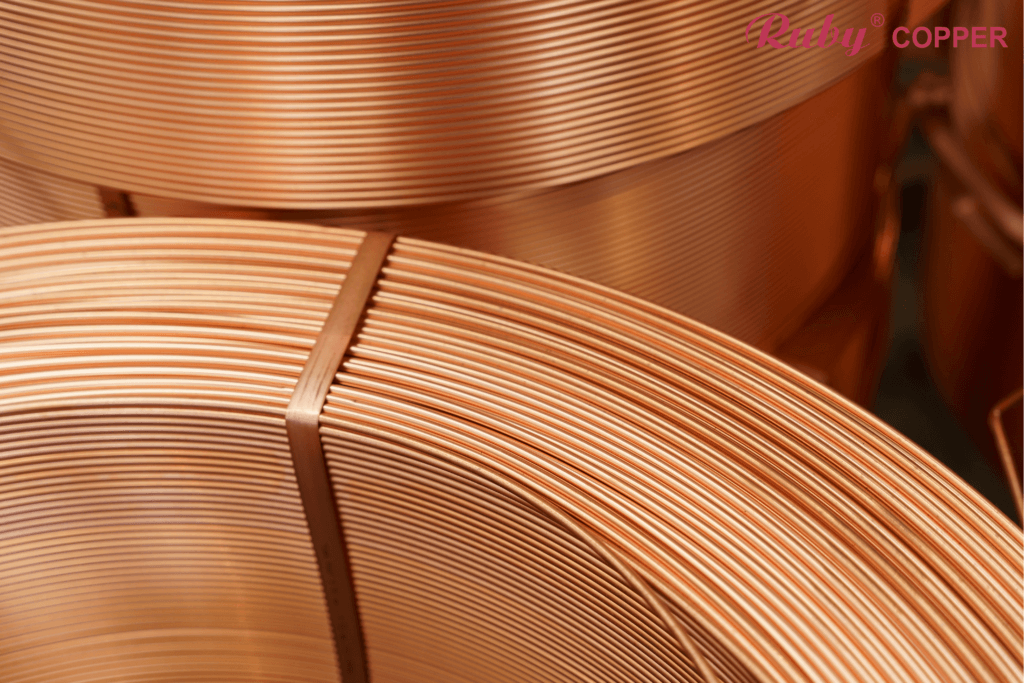
Because HVAC systems often operate continuously for many years, selecting copper tubes produced under internationally recognized standards significantly reduces operational risks.
Engineering Requirements Defined by ASTM B280 Standard
The ASTM B280 standard specifies several technical requirements that manufacturers must satisfy before products reach the market.
Dimensional Accuracy
Copper tubes must comply with specified tolerances for:
- Outside diameter
- Wall thickness
- Length
- Straightness (for straight tubes)
- Coil dimensions (for coil products)
Maintaining precise dimensions ensures compatibility with fittings, expansion processes, and installation equipment.
Mechanical Properties
Mechanical performance is equally important.
Copper tubes must provide sufficient:
- Tensile strength
- Ductility
- Formability
- Resistance to deformation during installation
Proper mechanical properties allow installers to bend, flare, and braze tubes without compromising system reliability.
Internal Cleanliness
One of the defining characteristics of the ASTM B280 standard is its emphasis on tube cleanliness.
Residual lubricants, moisture, metal particles, or contaminants inside copper tubes can affect refrigerant circulation and compressor performance.
Manufacturers therefore implement strict cleaning processes before packaging to minimize internal contamination.
Manufacturing Practices That Support ASTM B280 Compliance
Producing copper tubes that comply with the ASTM B280 standard requires more than meeting final inspection criteria. Quality must be controlled throughout the manufacturing process.
High-Purity Raw Materials
Production begins with high-purity copper cathodes.
Premium raw materials provide:
- Excellent thermal conductivity
- Stable mechanical properties
- High corrosion resistance
- Consistent chemical composition
Using high-quality copper minimizes production variation and supports long-term product reliability.
Advanced Production Technology
Modern manufacturing facilities typically include:
- Continuous casting
- Surface milling
- Planetary rolling
- Multi-stage drawing
- Bright annealing
- Automated coiling
- Precision cutting
Each production stage contributes to dimensional stability and surface quality required by the ASTM B280 standard.
Comprehensive Quality Inspection
Quality inspection is integrated throughout production rather than performed only at the final stage.
Typical inspection procedures include:
- Dimensional measurement
- Eddy current testing
- Hydrostatic testing when applicable
- Air pressure leak testing
- Mechanical property testing
- Surface inspection
- Internal cleanliness verification
These inspections help manufacturers maintain consistent quality across every production batch.
Why Global Buyers Choose ASTM B280-Compliant Manufacturers
For international OEMs, contractors, and distributors, selecting a manufacturer capable of meeting the ASTM B280 standard provides confidence beyond product performance.
Reliable manufacturers typically offer:
- Stable production capacity
- Consistent product quality
- International certification systems
- Full traceability
- Technical support
- Comprehensive quality documentation
These capabilities simplify project approval, reduce installation issues, and improve supply chain reliability.

At Ruby Copper, manufacturing processes are designed around internationally recognized production practices. Advanced equipment, strict process control, high-purity raw materials, and comprehensive inspection procedures enable the company to supply copper tubes that meet demanding international requirements for HVAC and refrigeration applications.
Choosing the Right Manufacturing Partner
While many suppliers claim compliance with international standards, buyers should evaluate more than certification alone.
When selecting a copper tube manufacturer, consider:
- Production technology
- Raw material quality
- Testing capability
- Process consistency
- International export experience
- Quality management system
- Ability to support OEM customization
A manufacturer that combines these capabilities is better positioned to deliver consistent products for long-term projects.
For global contractors and OEM customers, working with an experienced manufacturer such as Ruby Copper helps reduce project risk while ensuring stable product quality across every shipment.
Conclusion
The ASTM B280 standard plays a critical role in ensuring the quality, safety, and reliability of copper tubes used in air conditioning and refrigeration systems. It establishes engineering requirements covering dimensions, mechanical properties, cleanliness, and inspection, giving buyers confidence in product performance.
Manufacturers that consistently comply with the ASTM B280 standard must invest in advanced production technology, rigorous quality control, and high-quality raw materials. By following these principles, Ruby Copper supplies copper tube solutions that meet the expectations of global OEM manufacturers, contractors, distributors, and engineering projects, supporting reliable HVAC systems around the world.


