
Selecting the right copper pipes for AC systems is one of the most important factors affecting cooling efficiency, system reliability, and long-term operating costs. Copper pipes transport refrigerant between the indoor and outdoor units, making them a critical component in every air conditioning installation. Choosing pipes with the correct dimensions, material quality, and manufacturing standards helps reduce refrigerant leakage, improve heat transfer, and extend equipment life.
Whether you are an HVAC contractor, distributor, or OEM manufacturer, understanding how to select copper pipes for AC systems will help ensure every installation performs as designed.
Why Copper Pipes for AC Systems Matter
Copper has long been the preferred material for refrigeration and air conditioning applications because of its excellent combination of physical and mechanical properties.
High thermal conductivity allows refrigerant to exchange heat efficiently throughout the cooling cycle.
Copper also offers outstanding corrosion resistance under normal operating conditions, helping maintain system integrity over many years.
Another advantage is its workability. Copper tubes can be bent, expanded, brazed, and connected without significantly affecting their mechanical performance when proper installation practices are followed.

Modern copper pipes for AC systems are manufactured with smooth internal surfaces and tight dimensional tolerances, reducing pressure loss while supporting efficient refrigerant flow.
Key Factors When Selecting Copper Pipes for AC Systems
Several technical considerations should be evaluated before purchasing copper pipes for AC systems.
Choose the Correct Tube Size
Pipe diameter directly influences refrigerant velocity, pressure drop, and cooling efficiency.
Using tubes that are too small increases pressure losses and reduces system performance.
Oversized tubing may lower refrigerant velocity, affecting proper oil return to the compressor.
Contractors should always follow the equipment manufacturer’s recommended suction and liquid line sizes.
Select the Appropriate Wall Thickness
Wall thickness affects the pipe’s pressure resistance and mechanical strength.
Air conditioning systems operating with modern refrigerants often require higher working pressures than older systems.
Selecting tubes that comply with recognized international standards ensures adequate safety margins during long-term operation.
Verify Copper Purity
Copper purity has a direct impact on durability and manufacturing consistency.
High-purity copper provides:
- Better thermal conductivity
- Improved ductility
- More reliable brazing performance
- Greater corrosion resistance
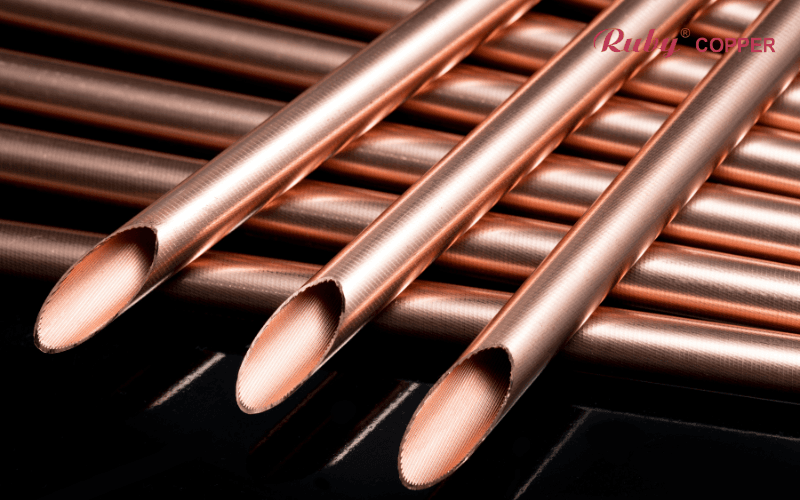
Inner grooved copper tubes improve heat exchange efficiency in modern air conditioning systems.
Premium manufacturers typically produce copper pipes for AC systems using Class 1 copper cathodes with purity levels of at least 99.95%.
Check Surface Cleanliness
Internal cleanliness is essential for refrigeration tubing.
Oil residue, moisture, metal particles, or oxidation inside the tube can contaminate refrigeration systems and shorten compressor life.
Quality manufacturers clean, inspect, and package tubes carefully to maintain clean internal surfaces before shipment.
International Standards for Copper Pipes for AC Systems
Choosing tubes manufactured according to internationally recognized standards helps ensure consistent quality across projects.
Common standards include:
- ASTM B280 for air conditioning and refrigeration tubing
- JIS H3300 for copper and copper alloy seamless tubes
- EN 12735 for refrigeration copper tubes
- AS/NZS standards for HVAC applications in Australia and New Zealand
Compliance with these standards ensures dimensional accuracy, mechanical properties, cleanliness, pressure resistance, and product consistency.
For contractors managing international projects, selecting certified copper pipes for AC systems simplifies specification approval and quality control.
How Ruby Copper Manufactures High-Quality Copper Pipes for AC Systems
Ruby Copper manufactures copper pipes for AC systems using an integrated production process designed to deliver consistent quality from raw material to finished product.
Production begins with premium Class 1 copper cathodes sourced from internationally recognized suppliers. Continuous casting technology produces homogeneous billets with excellent metallurgical quality.
The billets then pass through surface milling, planetary rolling, intermediate drawing, and final drawing processes to achieve precise dimensions.

Every production stage is monitored by experienced engineers using advanced manufacturing equipment.
Finished tubes undergo bright annealing under a controlled nitrogen atmosphere to improve cleanliness and achieve the required temper.
Ruby Copper also performs non-destructive testing, dimensional inspection, leak testing, and mechanical property verification before packaging.
This comprehensive quality control system enables Ruby Copper to supply reliable copper tubes for residential HVAC systems, commercial air conditioning, refrigeration equipment, and OEM manufacturing worldwide.
Common Mistakes When Choosing Copper Pipes for AC Systems
Selecting the wrong copper tube can increase installation costs and reduce system reliability.
Some common mistakes include:
- Choosing pipe sizes based only on price instead of equipment specifications.
- Purchasing products without verifying international compliance.
- Ignoring copper purity and manufacturing quality.
- Using tubes with poor internal cleanliness.
- Selecting suppliers without proven quality management systems.
Experienced contractors understand that investing in certified copper pipes for AC systems reduces maintenance costs, minimizes refrigerant leakage risks, and improves long-term system performance.
Conclusion
Selecting the right copper pipes for AC systems requires more than simply choosing the correct diameter. Contractors should evaluate tube size, wall thickness, copper purity, internal cleanliness, manufacturing standards, and supplier reliability before making a purchasing decision.
By selecting products manufactured under internationally recognized quality systems, project owners can improve installation efficiency, increase equipment lifespan, and reduce maintenance costs.
With advanced manufacturing technology, strict quality control, and compliance with global standards, Ruby Copper provides dependable copper pipes for AC systems that meet the demanding requirements of HVAC contractors, distributors, and OEM partners around the world.


