
When selecting copper tubes for HVAC, refrigeration, plumbing, or heat-transfer systems, material grade is only part of the specification. The copper tube temper is equally important because it describes the condition of the tube resulting from manufacturing processes such as annealing and cold working. Temper directly influences properties such as strength, ductility, hardness, and formability.
For contractors, OEMs, distributors, and engineering teams, understanding temper designations helps ensure that the selected copper tube matches the installation method and service requirements. The commonly encountered designations include O, OL, 1/2H, and H, although the exact terminology and requirements can vary between standards and manufacturers.
ASTM B601 establishes an alphanumeric system for designating the temper of wrought and cast copper and copper alloys. In this system, the letter H indicates a temper produced through cold working, while the detailed mechanical requirements are defined by the applicable product specification.
What Does Copper Tube Temper Mean?
A copper tube temper describes the metallurgical and mechanical condition of a tube after manufacturing operations such as drawing, rolling, and annealing. It is not the same thing as the copper alloy grade.
For example, C12200 identifies a particular copper material, while O, H02, or H04 describes its temper condition. Therefore, two tubes manufactured from the same copper grade can have different mechanical properties and different levels of formability because they are supplied in different tempers.
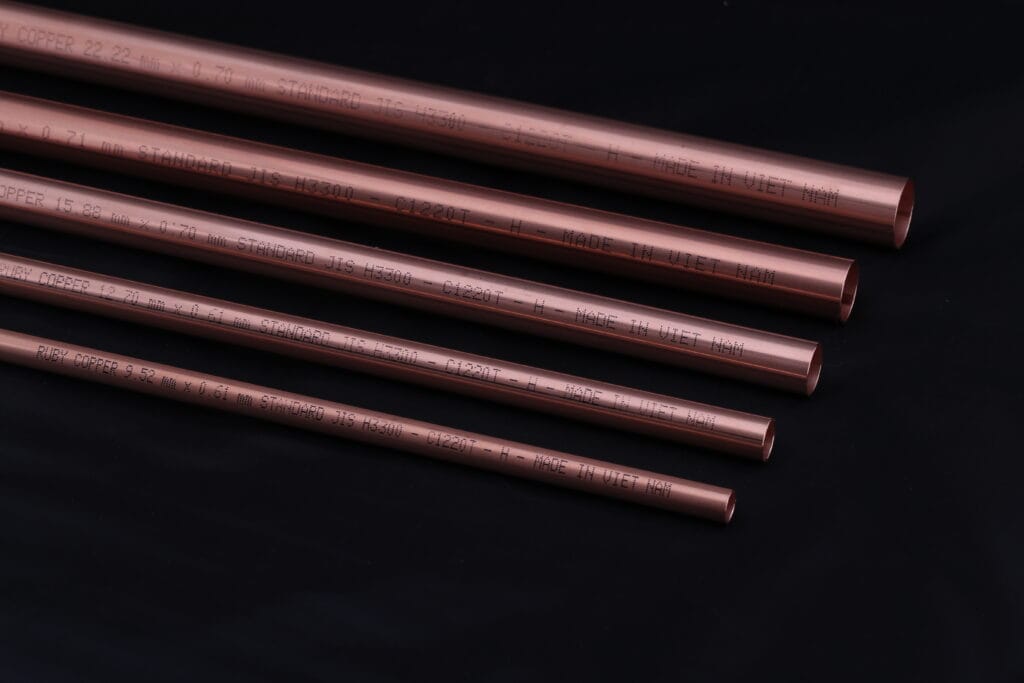
This distinction is particularly important in HVAC and refrigeration projects. ASTM B280, which covers seamless copper tube for air-conditioning and refrigeration field service, distinguishes between soft annealed coiled tube and hard-drawn straight tube and specifies requirements for properties including tensile characteristics, grain size, eddy-current testing, and cleanliness.
In practical terms, the softer the temper, the easier the tube generally is to bend and form. Increasing cold work generally increases strength and hardness while reducing ductility. The exact balance depends on the alloy, product specification, dimensions, and manufacturing process.
Why Temper Matters in Copper Tube Selection
For an HVAC contractor, temper affects how the tube behaves during installation.
A soft tube can be easier to bend around equipment and through restricted spaces. A harder tube provides greater rigidity and can be advantageous where straight runs and dimensional stability are priorities.
Consequently, choosing a copper tube temper should not be based simply on which designation appears to have a higher strength. The correct choice depends on the tube’s intended application, installation method, required bending, pressure conditions, dimensions, and governing standard.
O Temper: Soft Annealed Copper Tube
O is commonly associated with an annealed or soft temper. Annealing reduces the effects of cold work and produces a softer, more ductile material condition.
For copper tubing, this condition is particularly useful where substantial bending or forming is required. ASTM B88, for example, recognizes annealed copper water tube as suitable for applications involving flared or compression fittings and notes that joining and bending requirements are factors in tube selection.
In HVAC and refrigeration, soft annealed tubing is commonly supplied in coils. ASTM B280 specifies that coiled lengths with soft annealed tempers are bright annealed after coiling and then subjected to requirements concerning dehydration and end closure.
The principal advantages of O temper include:
- High ductility
- Good formability
- Easier bending and routing
- Suitability for applications requiring significant forming
- Convenient supply in coiled configurations
However, O temper is not automatically the best option for every project. Where a system requires greater rigidity or straightness, a harder temper may be more appropriate.
OL, 1/2H and H: What Is the Difference?
The designations OL, 1/2H, and H are often encountered in commercial copper tube specifications, but they should be interpreted carefully because terminology is not completely uniform across all standards and manufacturers.
OL is commonly used in industry to describe light annealed copper tube. Compared with fully annealed O temper, OL generally represents a less-soft condition. However, OL should not be treated as a universal ASTM grade. Some manufacturers use the designation in their product literature, while formal standards may use different codes to define the required mechanical condition.
For this reason, buyers should always verify what a supplier means by OL and request the relevant tensile strength, elongation, hardness, or applicable standard.
By comparison, 1/2H represents a half-hard condition. In the ASTM temper system, the standardized designation corresponding to half hard is H02. Copper Development Association technical information identifies H02 as “Half Hard” and places it between softer annealed conditions and harder tempers in the cold-worked series.
H is commonly used to describe a hard or cold-worked condition, but the precise designation should again be checked against the relevant product standard. ASTM B601 explains that H-type designations identify tempers resulting from cold working, while the applicable product specification establishes the required properties.
The practical relationship can therefore be summarized as:
| Temper | General condition | Typical characteristic |
|---|---|---|
| O | Soft annealed | High ductility and formability |
| OL | Light annealed* | Softer than hard-drawn, but not necessarily equivalent to O |
| 1/2H / H02 | Half hard | Higher strength with moderate formability |
| H | Hard / cold worked* | Higher strength and rigidity |
*The exact meaning and mechanical requirements must be confirmed against the applicable standard or manufacturer’s specification.
How Copper Tube Temper Affects HVAC Applications
Choosing the appropriate copper tube temper is particularly important in HVAC and refrigeration because installation conditions vary considerably between projects.
For refrigerant piping that requires extensive bending, soft annealed tube can simplify routing around indoor units, outdoor units, heat exchangers, and other components. The ability to form the tube with fewer operations can also be valuable where installation space is limited.
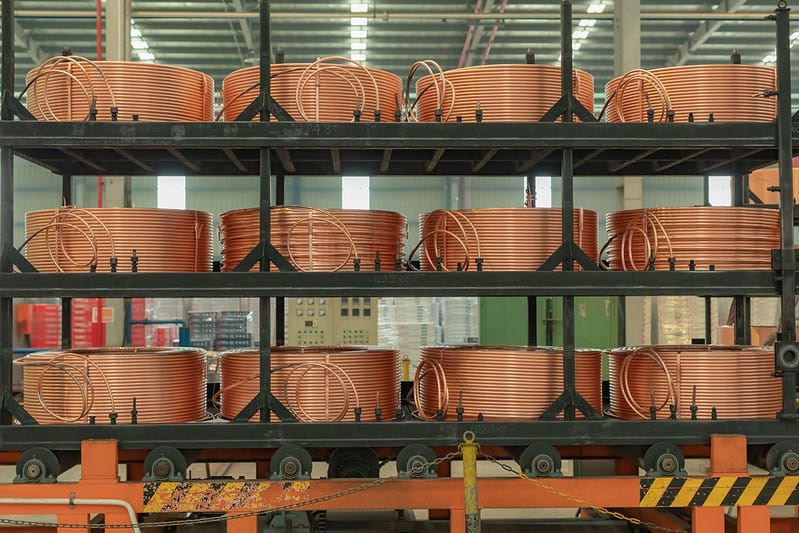
Harder copper tube, on the other hand, can be advantageous for straight runs where greater rigidity is required. ASTM B280 distinguishes soft annealed coiled tubes from hard-drawn straight tubes for air-conditioning and refrigeration field service, illustrating how tube condition is connected to product form and intended installation.
Half-hard conditions can provide an intermediate solution when a project requires a balance between formability and mechanical strength. However, the appropriate selection should be based on the actual project specification rather than a general assumption that one temper is universally superior.
It is also important to remember that temper does not determine corrosion resistance, thermal conductivity, or chemical composition by itself. Those characteristics depend primarily on the copper grade and the complete manufacturing specification.
How to Specify the Right Copper Tube Temper
For international procurement, specifying only “soft,” “half hard,” or “hard” may not provide enough technical information. A professional purchasing specification should identify the applicable standard and clearly define the required material condition.
For example, an HVAC project specification may need to establish:
- Copper grade or UNS/JIS material designation
- Applicable product standard
- Temper designation
- Outside diameter and wall thickness
- Tensile strength and elongation requirements
- Dimensional tolerances
- Internal cleanliness requirements
- Non-destructive testing requirements
- Surface and end condition
- Packaging and protection requirements
- Inspection and certification documentation
This is especially important when purchasing from international suppliers. The same general term can have different technical meanings between standards or commercial specifications.
ASTM B601 itself emphasizes that the temper classification is not a product specification; the actual property requirements must come from the applicable product standard.
For HVAC applications, ASTM B280 is an important reference because it specifically addresses seamless copper tube for air-conditioning and refrigeration field service and includes requirements relating to material, temper, mechanical properties, testing, and cleanliness.
Conclusion
Understanding copper tube temper is essential when selecting tubing for professional HVAC, refrigeration, and engineering applications. O temper provides a soft, highly ductile condition suited to bending and forming, while half-hard H02 offers a balance between strength and formability. Harder H conditions provide greater mechanical strength and rigidity.
OL requires more careful interpretation because it is not a universal temper designation across all copper tube standards. It is commonly used commercially for light-annealed material, but the exact mechanical requirements should always be confirmed with the supplier’s specification.
For contractors, OEMs, and international distributors, the safest approach is to evaluate temper together with the copper grade, applicable standard, dimensions, mechanical properties, testing, and cleanliness requirements. This ensures that the selected copper tube is technically suitable for the intended application rather than relying on a temper abbreviation alone.
For manufacturers such as Ruby Copper, providing clear technical documentation for material grade, temper, dimensions, testing, and quality requirements is essential to supporting reliable procurement decisions for international HVAC and refrigeration projects.


