
Copper tubing is one of the most established materials used in air-conditioning and refrigeration systems. Its combination of thermal conductivity, formability, corrosion resistance, and suitability for brazed connections makes it well suited to refrigerant circuits and heat-transfer applications.
However, choosing the right copper tubes for air conditioning involves more than selecting a tube by outside diameter. Engineers, contractors, OEMs, and distributors need to consider the copper grade, tube dimensions, temper, cleanliness, manufacturing standard, testing requirements, and intended operating conditions.
For international HVAC projects, these details are particularly important because different standards may specify different requirements for material, dimensions, mechanical properties, testing, and product condition.
Why Copper Tubes Are Used in Air Conditioning Systems
The performance requirements of an air-conditioning refrigerant circuit make copper a practical tubing material. The tube must withstand pressure, facilitate heat transfer, tolerate fabrication processes, and maintain reliable connections throughout the service life of the system.
Copper has high thermal conductivity, allowing heat to transfer efficiently through the tube wall. This is particularly relevant in heat exchangers and refrigerant circuits where thermal transfer is fundamental to system operation.
Copper tubing also offers good formability. Depending on the temper, it can be supplied as soft coils for bending and routing or as straight lengths in harder conditions. ASTM B280, the specification for seamless copper tube for air-conditioning and refrigeration field service, recognizes both soft annealed coiled tube and hard-drawn straight tube.
Another important characteristic is its suitability for joining. Copper tubing can be joined using established brazing and soldering techniques, subject to the requirements of the specific HVAC system and applicable standards.
For these reasons, copper tubes for air conditioning are widely used in refrigerant piping, connections between system components, and other tubing assemblies.
Copper Grade and Tube Condition Matter
Not all copper tubes have the same material designation or mechanical condition. ASTM B280 identifies UNS C10200, C12000, and C12200 as copper materials that may be used for the specified air-conditioning and refrigeration service, unless otherwise specified.
C12200, for example, is phosphorus-deoxidized copper with high residual phosphorus, while C10200 is oxygen-free copper. Therefore, buyers should not treat all copper grades as technically identical simply because they are used for HVAC applications.
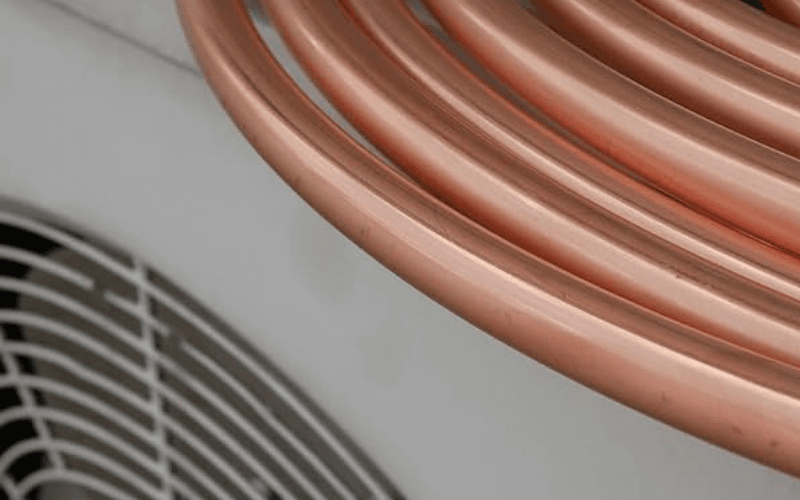
Temper is also important. A soft annealed tube provides greater ductility and formability, whereas a hard-drawn tube provides a more rigid product suitable for straight-length applications.
How to Choose Copper Tubes for Air Conditioning
Selecting copper tubes for air conditioning should begin with the technical requirements of the system rather than simply choosing the most common tube size.
1. Check the Applicable Standard
The first step is identifying the standard required by the project, customer, or destination market.
For field air-conditioning and refrigeration service, ASTM B280 is a key reference. It establishes requirements for seamless copper tube used in connections, repairs, and alterations of air-conditioning or refrigeration units. The specification includes requirements related to grain size, tensile properties, eddy-current testing, and cleanliness.
Other applications may fall under different specifications. ASTM B88, for example, covers seamless copper water tube for plumbing and fluid-conveyance applications rather than specifically defining field-service ACR tubing.
Therefore, a tube should be evaluated against the standard actually specified for the application.
2. Select the Appropriate Temper
Temper determines the mechanical condition of the tube and has a direct effect on installation characteristics.
Soft annealed copper tubing is easier to bend and form. This makes it practical for installations where the refrigerant line must be routed around equipment or through restricted spaces.
Hard-drawn straight tube offers greater rigidity and is commonly supplied where straight runs are required. ASTM B280 specifically distinguishes soft annealed coiled lengths from hard-drawn straight lengths and establishes different requirements for their condition and handling.
The correct choice depends on the installation method, tube dimensions, system design, and project specification.
3. Consider Outside Diameter and Wall Thickness
Outside diameter and wall thickness are fundamental design parameters for copper tubes for air conditioning.
The selected dimensions influence flow characteristics, pressure capability, weight, installation requirements, and compatibility with fittings and other system components. The appropriate size should therefore be determined by the equipment manufacturer’s requirements and the engineering design of the refrigerant circuit.
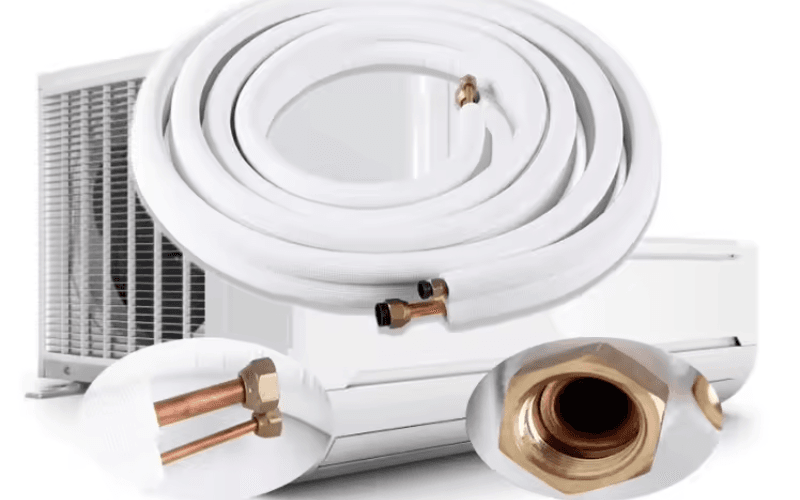
The Copper Development Association’s Copper Tube Handbook provides dimensional and physical data for ACR copper tube, including outside diameter, inside diameter, wall thickness, cross-sectional area, and tube weight.
A buyer should specify the complete dimensional requirement rather than relying only on a nominal size.
Manufacturing and Quality Requirements for HVAC Copper Tubes
The manufacturing process has a direct influence on the consistency and reliability of copper tubes for air conditioning.
A typical seamless copper tube manufacturing route involves melting and casting the copper alloy, forming the billet or tube shell, drawing the tube to the required dimensions, and applying appropriate heat treatment where necessary. Further inspection and finishing processes are then used to meet the product specification.
For ACR applications, internal cleanliness is particularly important. Residual contaminants or moisture inside refrigerant tubing can adversely affect system cleanliness and installation quality. ASTM B280 therefore includes cleanliness requirements, and its requirements for soft annealed coiled tubing include dehydration and closure of the tube ends after processing.
Eddy-current testing is another important quality-control method specified by ASTM B280. The standard requires test results to conform to its specified requirements, alongside grain-size and tensile-property requirements.
For international buyers, this means a supplier evaluation should extend beyond visual inspection. Documentation such as material certificates, dimensional inspection records, testing results, and certificates of conformity can provide important evidence that the supplied product meets the agreed specification.
Applications of Copper Tubes in Air Conditioning
The applications of copper tubes for air conditioning extend across residential, commercial, industrial, and specialized HVAC equipment.
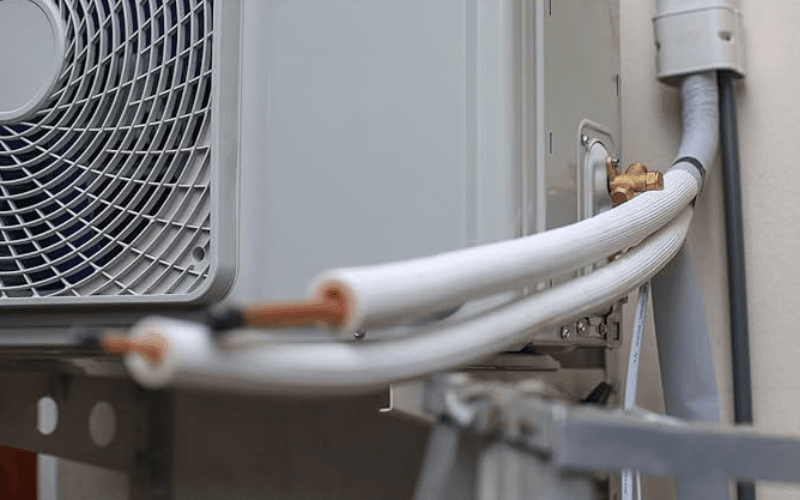
In split air-conditioning systems, copper tubes are commonly used for refrigerant connections between indoor and outdoor units. In larger systems, copper tubing can form part of refrigerant circuits connecting compressors, condensers, evaporators, expansion devices, and other components.
Copper tubes are also used in refrigeration equipment and heat-transfer assemblies. Their combination of thermal conductivity and fabrication characteristics makes them suitable for systems where controlled refrigerant flow and reliable heat transfer are required.
For manufacturers and OEMs, tube selection may also involve additional requirements such as straightness, surface condition, dimensional tolerances, internal cleanliness, end protection, packaging, and compatibility with automated production processes.
The Copper Development Association’s technical documentation identifies ACR copper tube as a product intended for air-conditioning and refrigeration service and provides dimensional information for this application.
For large projects, these technical details should be incorporated into the purchasing specification before production begins.
What Should HVAC Buyers Check Before Purchasing?
When sourcing copper tubes for air conditioning from an international manufacturer, procurement teams should establish a clear technical specification before requesting quotations.
Important parameters include:
- Copper grade and material designation
- Applicable product standard
- Outside diameter and wall thickness
- Temper and product form
- Mechanical properties
- Dimensional tolerances
- Internal cleanliness requirements
- Eddy-current or other specified non-destructive testing
- Surface condition
- End protection and packaging
- Inspection and certification requirements
It is also important to distinguish between a tube intended specifically for air-conditioning and refrigeration service and a general-purpose copper tube.
ASTM B280 is specifically focused on seamless copper tubes for field air-conditioning and refrigeration applications, whereas ASTM B88 addresses copper water tube for plumbing and similar fluid-conveyance applications.
This distinction can help international contractors avoid specifying a general plumbing product when an ACR-specific specification is required.
For a manufacturer such as Ruby Copper, technical transparency is essential when working with international contractors, distributors, OEMs, and HVAC project partners. A professional supplier should be able to communicate material grade, applicable standard, dimensions, temper, inspection requirements, and product documentation clearly.
Conclusion
Choosing the right copper tubes for air conditioning requires a complete evaluation of material, dimensions, temper, cleanliness, testing, and applicable standards.
Copper remains a highly practical material for HVAC and refrigeration tubing because it combines useful thermal, mechanical, and fabrication characteristics. However, the best tube for a particular project depends on the actual system design and technical specification.
For international HVAC contractors and OEMs, ASTM B280 provides an important reference for seamless copper tube intended for air-conditioning and refrigeration field service. Its requirements demonstrate why material grade alone is not sufficient: tube condition, mechanical properties, cleanliness, testing, and product form are also important.
By establishing these requirements before purchasing and working with a manufacturer capable of providing consistent production and quality documentation, project teams can make more reliable decisions when sourcing copper tubing for demanding HVAC applications.


