
For HVAC, refrigeration, and heat-transfer applications, selecting the right copper tube requires more than simply choosing a suitable diameter and wall thickness. Material grade, temper, mechanical properties, cleanliness, dimensional accuracy, and applicable standards can all affect system performance and installation reliability.
C1220T-O copper tube is a widely recognized configuration under JIS H 3300, combining C1220 phosphorus-deoxidized copper with the O temper. Its combination of high copper content, ductility, thermal conductivity, and formability makes it suitable for applications where the tube must be bent, formed, or processed without compromising system integrity.
For international contractors and HVAC manufacturers, understanding what C1220T-O represents is therefore important when evaluating copper tube specifications and comparing products from different suppliers.
What Is C1220T-O Copper Tube?
C1220T-O copper tube is a seamless copper tube made from C1220 phosphorus-deoxidized copper and supplied in the O temper condition.
The material designation can be understood in two parts:
- C1220 – the copper alloy/material grade.
- T – the product designation used for the standard JIS H 3300 tube.
- O – the temper, indicating an annealed or soft condition.
According to material data corresponding to JIS H 3300, C1220 contains at least 99.9% copper, with phosphorus controlled at approximately 0.015–0.040%. The grade is classified as phosphorus-deoxidized copper rather than oxygen-free copper.
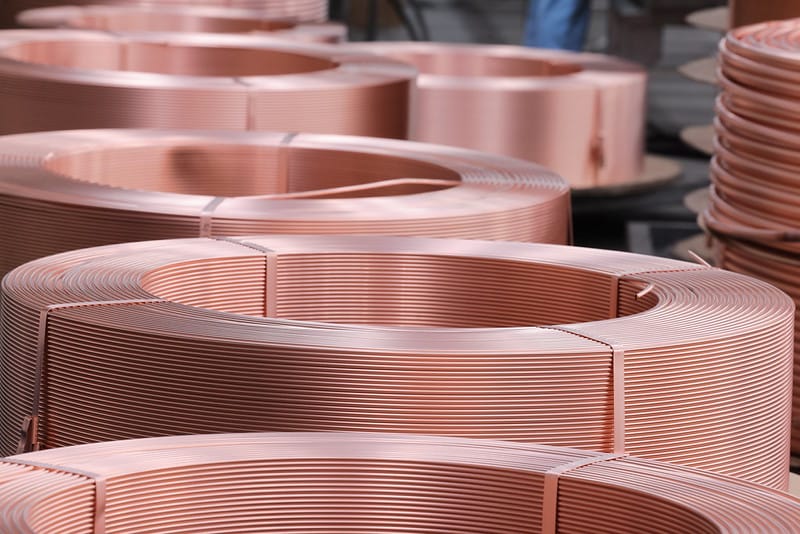
The equivalent American designation commonly associated with this material is UNS C12200, also known as DHP copper or phosphorus-deoxidized, high-residual-phosphorus copper. The Copper Development Association lists C12200 with a minimum copper content of 99.9% and phosphorus between 0.015% and 0.040%.
This distinction is important for technical specifications. C1220T-O and C12200 are closely related material designations, but they are not simply interchangeable labels without considering the applicable product standard, dimensions, temper, testing requirements, and certification.
C1220T-O and the O Temper
The O temper is particularly important for HVAC applications because annealing produces a softer and more ductile tube condition.
Under JIS H 3300 data, C1220T-O is specified with a minimum tensile strength of approximately 205 MPa and minimum elongation of 40%, with dimensional ranges defined by the applicable standard.
The softer condition provides practical advantages during installation, especially when tubing needs to be bent or shaped around equipment and confined installation spaces.
However, temper selection should always be based on the system design and applicable specification. A softer tube is not automatically the best choice for every application.
Key Properties of C1220T-O Copper Tube
The performance of C1220T-O copper tube comes from both the C1220 material composition and its annealed condition.
1. High Copper Content
C1220 is a high-copper material, with a minimum copper content of 99.9%. Phosphorus is intentionally controlled as the deoxidizing element.
This composition contributes to the material’s established thermal and fabrication characteristics.
2. Excellent Thermal Conductivity
Copper is widely used in heat-transfer equipment because of its high thermal conductivity. The Copper Development Association reports a thermal conductivity of approximately 196 Btu/ft²·hr·°F at 68°F for C12200.
This characteristic is particularly valuable in HVAC and refrigeration systems, where efficient heat transfer is essential to condenser, evaporator, and refrigerant circuit performance.
3. High Ductility and Formability
One of the major advantages of the O temper is its ductility. JIS H 3300 data for C1220T-O specifies a minimum elongation of 40%, supporting applications where the tube must undergo bending and forming.
This makes C1220T-O copper tube particularly practical for installation configurations involving bends and routing around HVAC equipment.
4. Good Brazing and Fabrication Characteristics
C12200 is rated by the Copper Development Association as having excellent suitability for soldering and brazing and excellent cold-working capability.
For HVAC contractors, this is an important consideration because copper tubing systems commonly require reliable joining, bending, cutting, and forming during installation.
C1220T-O Copper Tube in HVAC and Refrigeration
One of the most important applications for C1220T-O copper tube is HVAC and refrigeration.
Copper tubing is commonly used to connect components within refrigeration and air-conditioning circuits because it combines thermal conductivity, corrosion resistance, formability, and compatibility with established joining methods.
ASTM B280-23, for example, covers seamless copper tubes for field air-conditioning and refrigeration service and permits several copper grades, including UNS C10200, C12000, and C12200. The standard addresses requirements including grain size, tensile properties, eddy-current testing, and cleanliness.
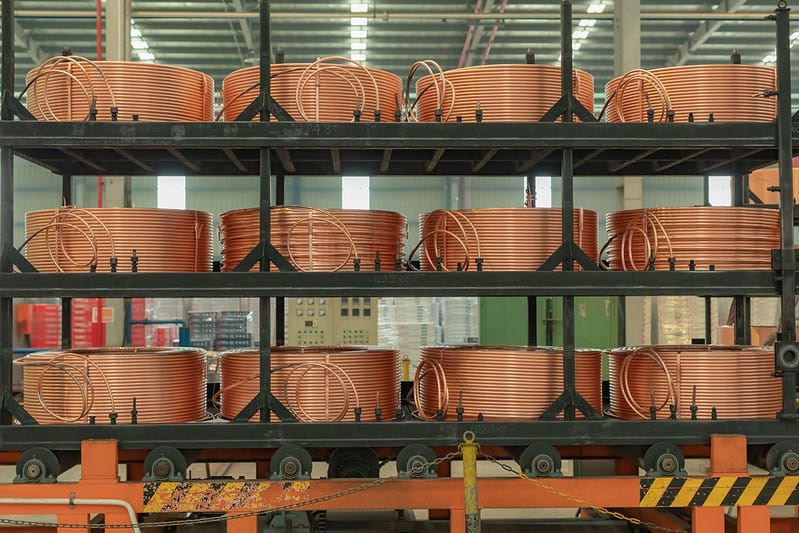
Typical applications can include:
- Refrigerant piping and connecting lines
- Air-conditioning systems
- Refrigeration equipment
- Heat exchangers
- Condenser and evaporator connections
- Copper tubing assemblies requiring bending and forming
- Insulated copper tube systems
For example, manufacturers of insulated copper tubing use C1220T-O/JIS H 3300 material for applications connecting indoor and outdoor air-conditioning units.
The suitability of a particular tube for a specific refrigerant, pressure rating, diameter, and installation method should nevertheless be confirmed against the applicable project specification and governing standard.
C1220T-O vs. C12200: What Should Buyers Know?
For international procurement, one of the most common sources of confusion is the relationship between C1220T-O copper tube and C12200.
C1220 is the Japanese material designation used under JIS, while C12200 is the corresponding UNS designation used in North American material classification. The two are closely related in chemical composition: both identify phosphorus-deoxidized copper with approximately 99.9% minimum copper and controlled phosphorus.
However, buyers should not evaluate a copper tube based on alloy number alone.
A technical purchasing specification should also confirm:
- Applicable product standard, such as JIS H 3300 or ASTM B280.
- Material designation and chemical composition.
- Temper condition.
- Outside diameter and wall thickness.
- Mechanical properties.
- Eddy-current or other applicable non-destructive testing.
- Internal cleanliness requirements.
- Packaging and end protection.
- Inspection and certification documentation.
This approach is particularly important for international HVAC projects because a tube that has the correct basic alloy composition may still fail to satisfy the dimensional, mechanical, cleanliness, or testing requirements of a particular project standard.
Choosing C1220T-O Copper Tube for International HVAC Projects
For contractors, distributors, and OEM customers, selecting C1220T-O copper tube should begin with the application rather than the material designation alone.
If the installation requires a highly formable tube for routing and bending, the O temper can provide a practical advantage. If the project requires a harder condition for specific mechanical or installation requirements, another temper may be more appropriate.
The applicable standard is equally important. JIS H 3300 defines requirements for copper and copper-alloy seamless pipes and tubes, while ASTM B280 specifically addresses seamless copper tubes used for air-conditioning and refrigeration field service.
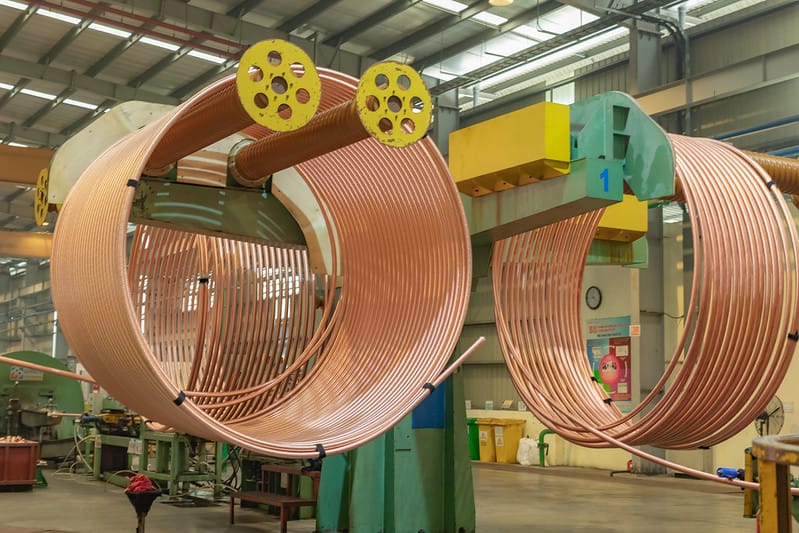
For international projects, suppliers should therefore be able to provide clear documentation covering material grade, temper, dimensions, mechanical properties, testing, and quality control.
For a manufacturer such as Ruby Copper, this level of technical transparency is essential when supplying copper tubes to professional HVAC contractors, distributors, OEMs, and international project partners. The objective is not simply to supply copper tubing, but to provide a product that can be evaluated against the technical requirements of the intended system and applicable international standards.
Conclusion
C1220T-O copper tube combines the properties of JIS C1220 phosphorus-deoxidized copper with an annealed O temper, providing high copper content, good thermal conductivity, and excellent ductility and formability. These characteristics make it a practical material for many HVAC, refrigeration, heat-transfer, and tubing applications.
For international buyers, however, material designation should only be the starting point. The correct evaluation should include the applicable standard, temper, dimensions, mechanical properties, cleanliness, testing requirements, and required certification.
By checking these factors together, contractors and OEMs can make a more reliable decision when sourcing copper tubes for demanding HVAC and refrigeration projects.


