
Copper tubes are essential components in HVAC, refrigeration, plumbing, medical gas, and industrial systems. Their performance directly influences system efficiency, reliability, and service life. While copper is naturally known for its excellent thermal conductivity and corrosion resistance, not every copper tube delivers the same level of quality. Numerous manufacturing and material-related factors determine the final product’s performance.
Understanding the factors affecting copper tube quality helps contractors, distributors, and OEM manufacturers select reliable products while minimizing installation risks and long-term maintenance costs. This article explains the most critical factors affecting copper tube quality and why choosing an experienced manufacturer like Ruby Copper makes a significant difference.
Raw Materials Are the First Factors Affecting Copper Tube Quality
The quality of a copper tube begins long before production starts. The purity of the raw material directly affects mechanical strength, thermal conductivity, corrosion resistance, and long-term durability.
High-quality manufacturers use Class 1 copper cathodes with a minimum copper purity of 99.95%. High-purity copper contains fewer impurities that may weaken the tube or reduce heat transfer efficiency.

Reliable suppliers are equally important. Leading manufacturers source copper cathodes from internationally recognized producers listed on the London Metal Exchange (LME), ensuring consistent material quality.
Without premium raw materials, even the most advanced production equipment cannot produce premium copper tubes.
Manufacturing Processes Are Major Factors Affecting Copper Tube Quality
Every production stage contributes to the final performance of a copper tube. Even small deviations during manufacturing may affect dimensional accuracy or mechanical properties.
Continuous Casting
The manufacturing process begins with continuous casting, where molten copper is transformed into solid billets.
A stable casting process produces billets with uniform internal structures and minimizes casting defects such as porosity or inclusions.
Rolling and Drawing
After casting, billets undergo surface milling, planetary rolling, intermediate drawing, and final drawing.
These processes gradually reduce tube diameter and wall thickness while maintaining dimensional accuracy.
Modern production lines use multiple drawing dies and carefully controlled drawing speeds to ensure consistent product quality.
Bright Annealing
Bright annealing adjusts the mechanical properties of copper tubes according to customer requirements.
This process also removes residual lubricants, improves surface cleanliness, and creates a smooth, bright finish.
Carefully controlled annealing temperatures help maintain excellent ductility without damaging the material.
Each of these manufacturing stages represents one of the most important factors affecting copper tube quality.
Quality Control Is Among the Most Important Factors Affecting Copper Tube Quality
Even with premium materials and advanced machinery, comprehensive quality control remains essential.
Professional manufacturers perform inspections throughout production rather than relying solely on final inspections.
Typical quality control procedures include:
- Dimensional inspection
- Surface quality inspection
- Mechanical property testing
- Chemical composition analysis
- Internal cleanliness inspection
- Pressure testing
- Non-destructive testing using eddy current equipment
Non-destructive testing is particularly valuable because it detects cracks, pinholes, and other surface defects without damaging the tube itself.
Manufacturers supplying international markets also verify compliance with standards such as ASTM B280, ASTM B68, JIS H3300, EN 12735, and AS/NZS 1571.
Strict inspection procedures significantly reduce the risk of defective products reaching customers and remain key factors affecting copper tube quality.
Storage and Handling Are Often Overlooked Factors Affecting Copper Tube Quality
Production quality alone cannot guarantee excellent performance if copper tubes are stored improperly.
Exposure to excessive humidity, direct sunlight, or extreme temperatures may lead to oxidation, discoloration, or contamination before installation.
Proper storage should include:
- Indoor warehouses with controlled temperature.
- Relative humidity below recommended limits.
- Protection from direct sunlight.
- Clean packaging that prevents dust and moisture.
- Careful transportation to avoid deformation.

Professional manufacturers invest heavily in packaging and warehouse management because post-production handling is one of the overlooked factors affecting copper tube quality.
Distributors and contractors should follow similar storage practices after receiving products.
How Ruby Copper Controls the Factors Affecting Copper Tube Quality
Ruby Copper manages every stage that influences product performance, from raw material selection to final shipment.
Production starts with premium Class 1 copper cathodes containing at least 99.95% copper purity. Advanced manufacturing technologies – including continuous casting, surface milling, planetary rolling, intermediate drawing, final drawing, bright annealing, and automated inspection – ensure precise dimensions and consistent mechanical properties.
Each copper tube undergoes rigorous quality control procedures, including non-destructive testing, dimensional verification, pressure testing, and surface inspection before shipment.
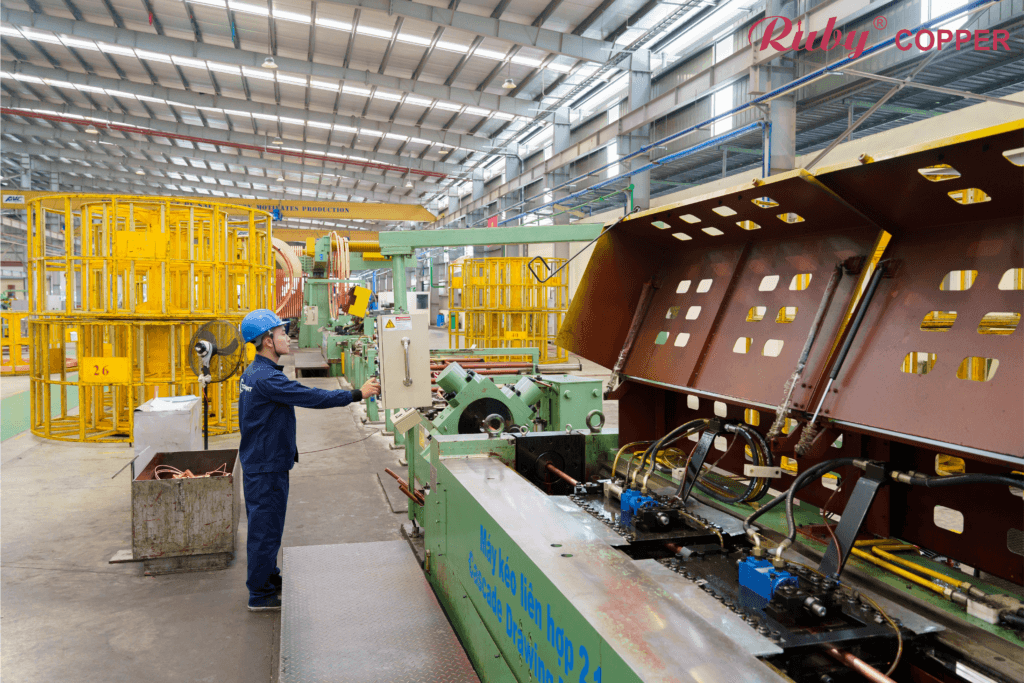
In addition, Ruby Copper maintains modern storage facilities designed to protect finished products from humidity, contamination, and environmental damage.
By controlling every critical factor affecting copper tube quality, Ruby Copper consistently supplies products that meet demanding international standards and satisfy customers across global markets.
Conclusion
Many factors affecting copper tube quality work together to determine the final performance of a copper tube. High-purity raw materials, advanced manufacturing technology, strict quality control, and proper storage all play equally important roles.
Selecting a reliable manufacturer is therefore just as important as selecting the right product specification. Experienced manufacturers maintain consistent quality throughout every production stage and provide products that comply with internationally recognized standards.
For contractors, distributors, and OEM partners seeking dependable copper tube solutions, Ruby Copper combines premium materials, advanced production technology, and comprehensive quality management to deliver products built for long-term performance.


