
Ruby Copper is a Vietnamese copper tube manufacturer recognized internationally for producing high-quality copper tubes. To achieve this reputation, Ruby Copper has continuously invested in research, innovation, advanced production lines, and process optimization.
Within the copper tube rolling process, surface milling and rolling are two essential stages that significantly improve manufacturing efficiency, increase output, and enhance product quality to meet growing market demands and increasingly strict industry standards.
In this article, we take a closer look at the surface milling and rolling operations used in the copper tube rolling process at Ruby Copper.
I. What Are Surface Milling and Rolling?
1. Surface Milling
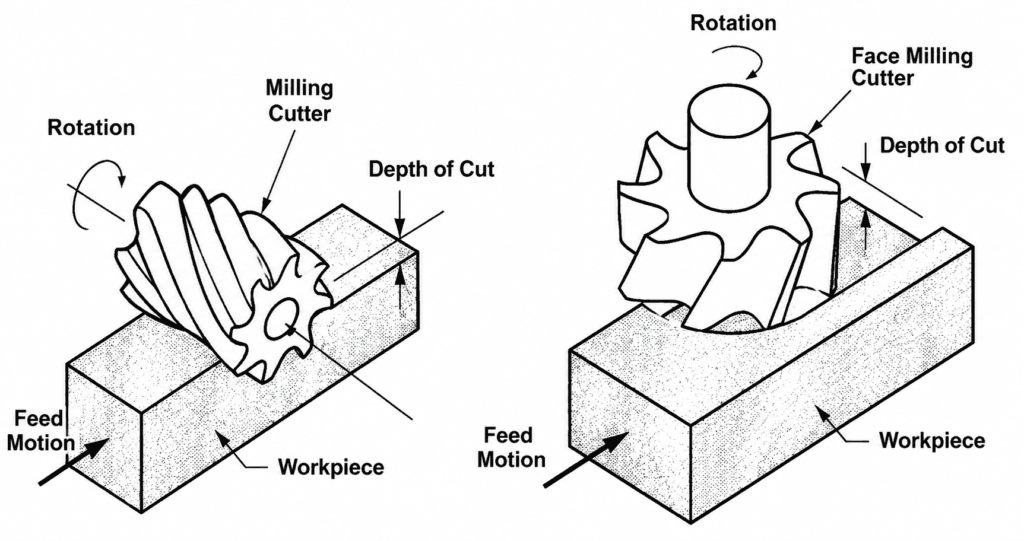
Surface milling is a machining process used to remove imperfections from the surface of a workpiece. This method is widely applied in metalworking shops and manufacturing facilities producing construction materials and metal products.
During milling, a rotating cutter with multiple cutting edges removes material from the billet surface. The cutter axis is positioned perpendicular to the workpiece to ensure a smooth and flat surface finish.
Milling cutters are typically made from high-hardness materials that offer excellent wear resistance and heat resistance, ensuring high dimensional accuracy and surface quality.
As the first preparation stage in the copper tube rolling process, surface milling helps create ideal conditions for the subsequent forming operations.
2. Rolling
Rolling is a metal-forming process in which a billet passes through the gap between rotating rolls moving in opposite directions. This causes plastic deformation, reducing the billet’s thickness and diameter while significantly increasing its length.
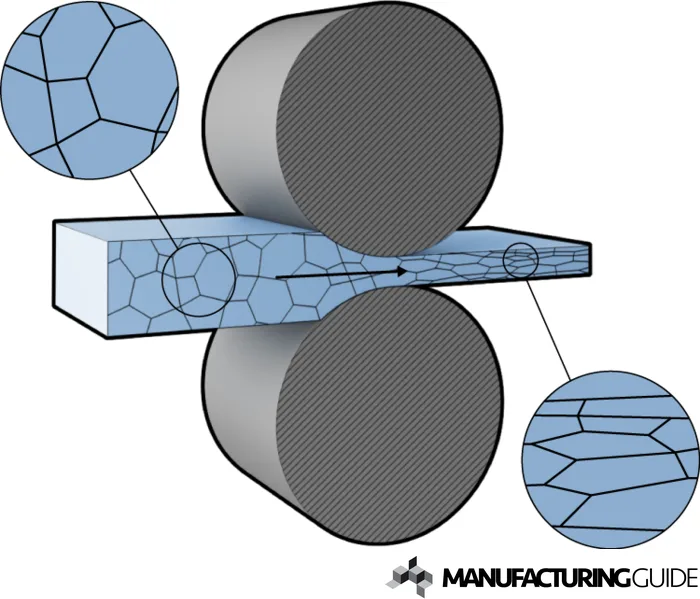
The rolling stage is the core of the copper tube rolling process because it transforms a solid billet into a preliminary tube shape.
Hot Rolling: Performed at elevated temperatures, allowing higher ductility and productivity. However, oxidation may reduce surface quality and dimensional accuracy.
Cold Rolling: Conducted at lower temperatures, providing superior dimensional accuracy and surface finish, although material ductility is reduced.
II. Surface Milling and Rolling in Ruby Copper’s Manufacturing Process
After casting, copper billets often contain minor surface defects such as scratches and oxidation. Although small, these imperfections can negatively affect downstream production stages.
To eliminate these defects, the billets are first passed through a milling machine. This preparation step is crucial to the success of the copper tube rolling process.
The milling cutter is made of highly wear-resistant alloy material and mounted on a fixed rotating shaft. As the billet rotates and advances through the cutter chamber, the opposite rotational directions of the cutter and billet efficiently remove the defective surface layer.

After milling, the billet surface becomes ideal for the next stage. The billet is then transferred into the rolling mill, where the actual copper tube rolling process begins.
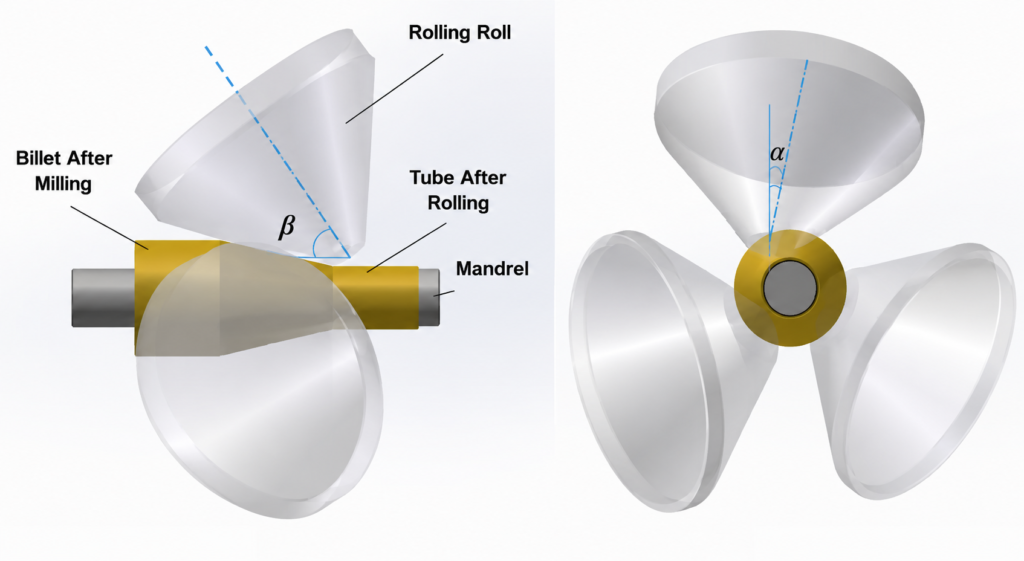
Ruby Copper employs three-roll planetary rolling technology, one of the most advanced copper tube manufacturing technologies available today. This technology delivers highly consistent product quality, excellent dimensional accuracy, and superior surface finish.
The three rolls rotate in different directions, creating a circular gap through which the billet passes. As the billet moves through this gap, it undergoes significant plastic deformation.
Meanwhile, the inner cavity of the billet is supported by a mandrel made from high-strength, heat-resistant alloy material. This prevents deformation of the inner surface during the copper tube rolling process.
Thanks to the circular profile formed by the three rolls, the billet exits the rolling chamber as a thin-walled tube—the initial form of the final copper tube product.
The rolling stage represents the largest deformation process in copper tube manufacturing. In fact, 70% to 90% of the total material reduction occurs during this single copper tube rolling process stage.
Combined with world-class equipment, this operation plays a critical role in enhancing both product quality and production efficiency.
III. How Ruby Copper Optimizes the Copper Tube Rolling Process
Surface milling and rolling are widely used in mechanical engineering, construction materials, refrigeration equipment, and many other industries. However, what distinguishes Ruby Copper is its commitment to optimizing every step of the copper tube rolling process through extensive research and engineering expertise.
Copper chips generated during surface milling are collected, dried, and returned to the melting furnace for recycling. This approach maximizes raw material utilization, reduces waste, and lowers production costs.
As a result, customers benefit from internationally certified Vietnamese copper tubes that offer excellent durability and competitive pricing.
Although several copper tube rolling technologies exist—including hot rolling after extrusion, two-roll rolling, three-roll planetary rolling, and four-roll planetary rolling—Ruby Copper selected three-roll planetary rolling after extensive research and consultation with leading industry experts.
The company chose this copper tube rolling process because it offers:
- Excellent suitability for air conditioning, refrigeration, plumbing, and medical copper tubes.
- Outstanding process stability and reliability.
- Superior product quality.
- Maximum productivity for HVAC copper tube manufacturing.
Ruby Copper’s production equipment is imported from globally recognized copper tube machinery manufacturers, ensuring high efficiency and consistent quality throughout the copper tube rolling process.
By integrating advanced technology with modern production lines, Ruby Copper has successfully achieved compliance with Japanese Industrial Standard JIS H3300 and numerous international product standards. This commitment to excellence is why Ruby Copper products are trusted by professional installers, distributors, and contractors while continuing to expand into international markets through a highly optimized copper tube rolling process.


