
Producing small-diameter copper tubes with high precision requires a series of complex manufacturing stages, particularly the intermediate drawing and final drawing processes. The copper tube drawing process plays a critical role in determining the dimensional accuracy and quality of the final product. While intermediate drawing gradually reduces the billet size through multiple production stages, final drawing is the critical step that enables copper tubes to achieve the exact dimensions required by customers.
I. How Does the Copper Tube Drawing Process Create Small-Diameter Tubes?
After completing the intermediate drawing stage, the copper tube billet is transferred to the final drawing process. This is a crucial stage within the overall copper tube drawing process, as it determines the tube’s final dimensions before shipment. Through this process, the factory can manufacture a wide range of copper tube sizes to meet diverse application requirements.
So, how does the final drawing process work?
To reduce the size of the tube billet, manufacturers use a drawing die system consisting of an inner die and an outer die. The gap between these two dies ultimately determines the final dimensions of the copper tube and is one of the most important factors in the copper tube drawing process.
Typically, producing a standard-compliant copper tube requires changing between 8 and 12 different sets of dies throughout the final drawing process. For larger billets, even more dies may be required to ensure a stable and accurate size reduction process.
Today, final drawing machines can operate at speeds of up to 1,000 meters per minute, maximizing production efficiency while maintaining product quality.
II. Challenges in the Copper Tube Drawing Process
1. Not Every Tube Size Can Be Produced Immediately
For common copper tube dimensions or sizes that have been manufactured previously, the factory usually already has the required drawing dies available in storage. Upon receiving an order, engineers simply select the appropriate die set based on established production formulas and proceed with the standard manufacturing process.
As a result, production lead times can be significantly shortened, even for large-volume orders.
However, producing entirely new tube dimensions is considerably more challenging. The factory must recalculate all process parameters involved in the copper tube drawing process and design a suitable die set. These dies are then manufactured by specialized industrial tooling suppliers overseas.
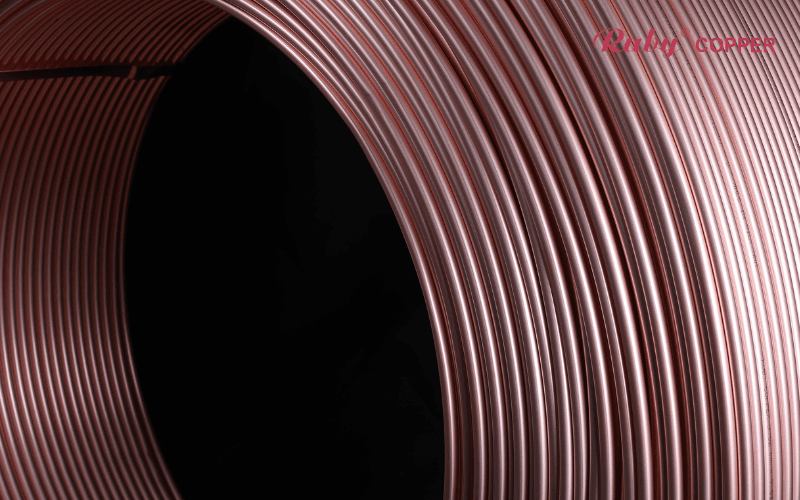
The die design and procurement process alone can take more than one month. Once the dies arrive in Vietnam, engineers conduct trial production runs and inspect the resulting tubes. If dimensional errors or technical issues are detected, further adjustments must be made before the dies can be put into full-scale production.
Even when everything proceeds smoothly, introducing a new die set into actual production may take anywhere from one to three months.
2. Tube Size Reduction Cannot Be Achieved in a Single Drawing Pass
Copper is known for its excellent ductility and elongation properties. However, the material can only withstand deformation within certain limits. If the drawing force exceeds those limits, the tube may crack or break during production.
For this reason, reducing the size of a copper tube billet cannot be accomplished in a single drawing pass. Instead, the copper tube drawing process must be divided into multiple stages. At each stage, engineers carefully calculate the degree of deformation to ensure the material remains within safe operating limits.
This process requires advanced technology and modern machinery. Every drawing stage must be precisely controlled in terms of drawing speed, die dimensions, and operating conditions to ensure maximum accuracy.
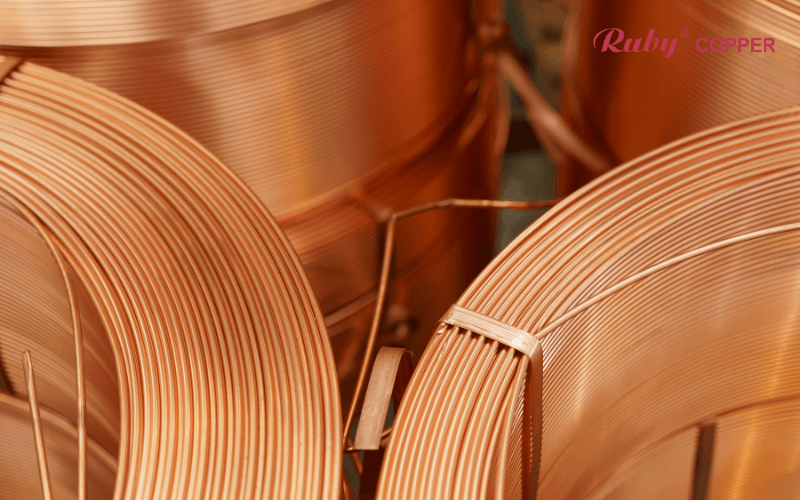
If calculation errors occur, corrective actions depend on where the problem is identified:
- If errors occur during the early stages, engineers can replace the dies and adjust the process accordingly.
- If dimensional deviations are discovered during the final stages, the entire batch of billets may need to be scrapped and returned to the melting process for recycling.
III. Ruby Copper’s Expertise in Manufacturing Small-Diameter Copper Tubes
With more than 20 years of experience in copper tube manufacturing, Ruby Copper has successfully developed a wide range of products, from ultra-small diameter tubes to heavy-wall copper tubes. This extensive experience has enabled the company to continuously improve its copper tube drawing process and meet increasingly demanding customer requirements.
Through years of production experience, the factory has accumulated an extensive inventory of drawing dies suitable for various product types. To maintain die accuracy, Ruby Copper operates a dedicated die maintenance and storage department. Storage facilities are carefully controlled for cleanliness and humidity to preserve tooling quality.
In addition, Ruby Copper’s experienced engineering team and advanced production equipment enable the company to efficiently develop manufacturing technologies for new tube dimensions and specifications.
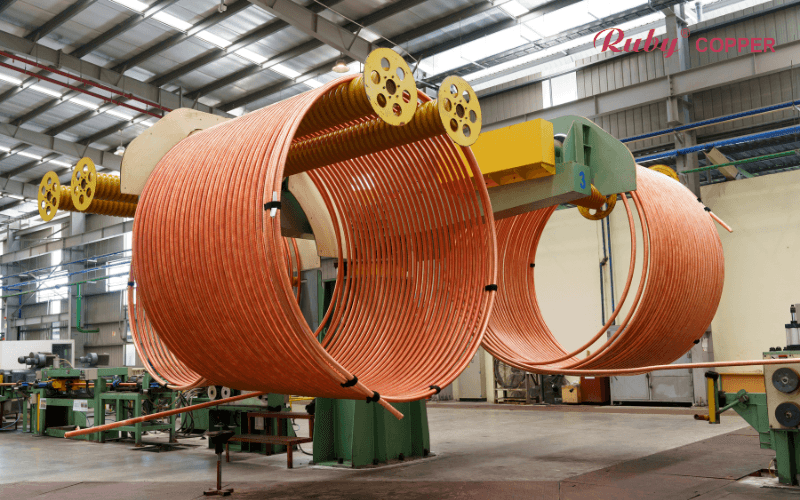
Today, Ruby Copper is among the few manufacturers in Vietnam capable of producing a broad range of copper tubes, from thin-wall to thick-wall products, with diameters as small as Ø0.27 mm.
Manufacturing small-diameter copper tubes requires not only advanced machinery but also precise engineering expertise and process calculations at every production stage. By continuously optimizing its copper tube drawing process, Ruby Copper continues to demonstrate its capabilities as a high-quality copper tube manufacturer in Vietnam, meeting the increasingly demanding requirements of global markets.


