
For international copper tube buyers, national standards are more than technical references. They define product requirements, material designations, testing methods, and acceptance criteria.
Two standards often compared in the Asian HVAC and piping markets are KS D 5301 vs JIS H3300.
Both standards cover seamless copper and copper alloy tubes. However, they belong to different national standard systems. Their technical requirements should therefore be checked independently.
For contractors and OEM buyers, understanding KS D 5301 vs JIS H3300 helps prevent specification errors. It also supports better supplier qualification and project documentation.
KS D 5301 and JIS H3300: What Do They Cover?
KS D 5301 is the Korean standard titled Copper and Copper Alloy Seamless Pipes and Tubes. The official Korean national standards database identifies it as a product standard under the metals category.
Its scope covers seamless copper and copper alloy tubes. The tubes must have a round cross-section and be produced through wrought processing. The latest confirmation date shown by Korea’s official standards database is April 22, 2024.
JIS H3300 has a very similar scope. The Japanese Standards Association lists the current standard as JIS H 3300:2018, titled Copper and Copper Alloy Seamless Pipes and Tubes.
JIS H3300 specifies wrought seamless copper and copper alloy tubes with a round cross-section. The standard was issued on October 22, 2018, and confirmed on October 20, 2023. It remains listed as valid.
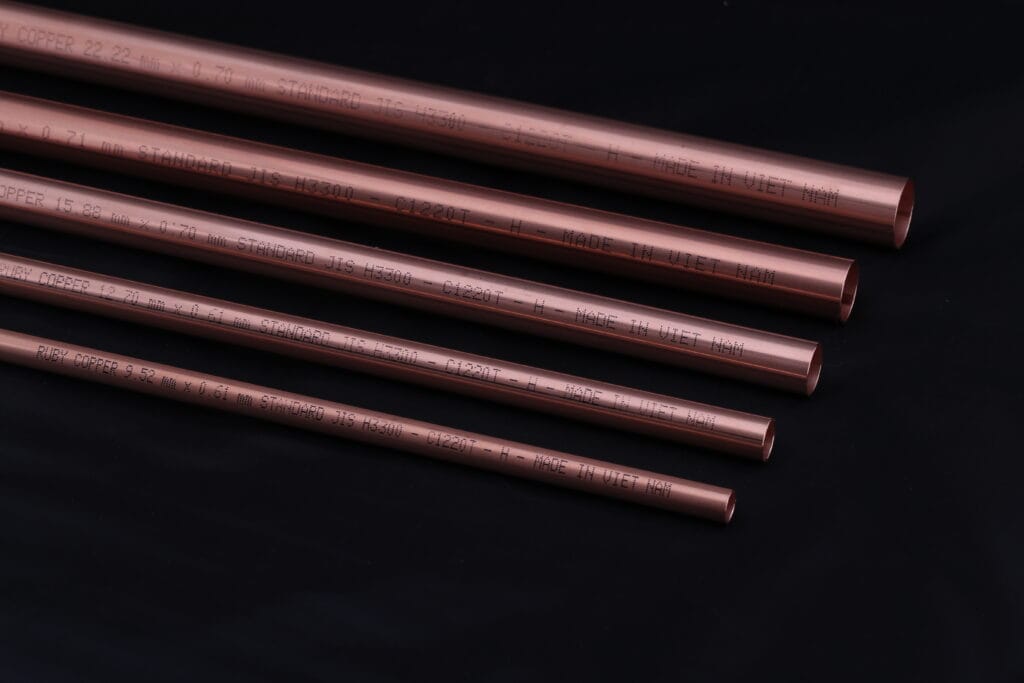
Therefore, the first important conclusion from KS D 5301 vs JIS H3300 is clear:
They have a highly comparable product scope, but they are separate national standards.
A tube meeting JIS H3300 should not automatically be described as KS D 5301 compliant.
KS D 5301 vs JIS H3300: Materials and Designations
Material designation is one of the most important points when comparing KS D 5301 vs JIS H3300.
The Korean KS system uses material numbers such as C1020, C1100, C1201, and C1220. An official Korean government guide also shows these grades within the KS D 5301 designation system.
The same guide describes KS D 5301 designations using several elements. These include material type, grade, temper, and nominal dimensions. For example, the designation structure includes outside diameter and wall thickness.
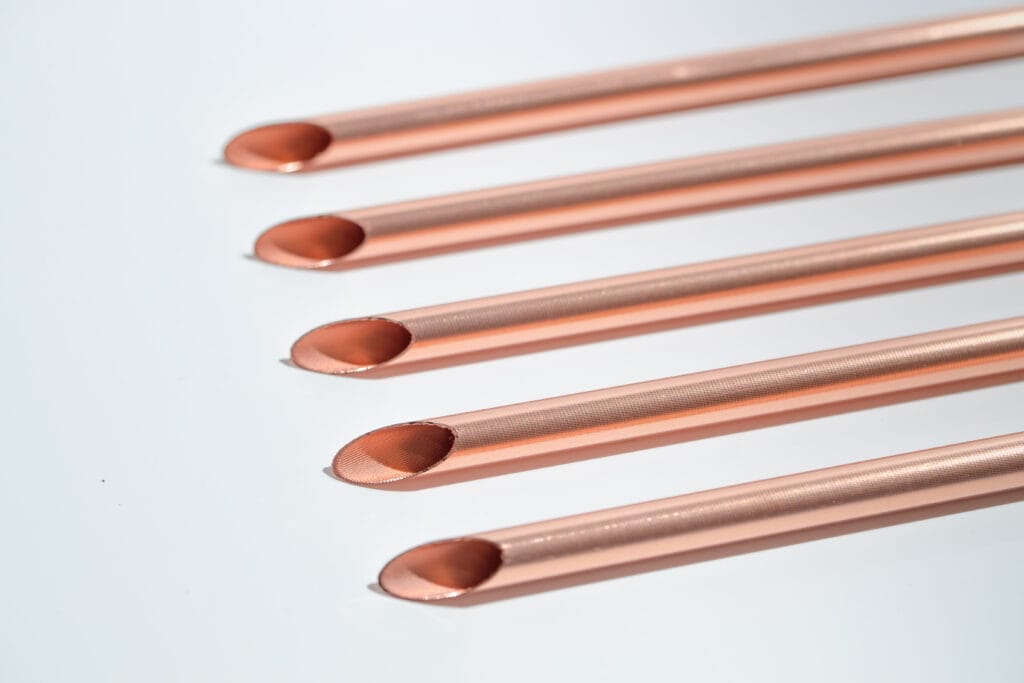
JIS H3300 also uses copper and copper alloy material designations. Its official preview references copper grades and related inspection methods. The standard includes requirements for chemical analysis, mechanical testing, grain size, conductivity, and eddy-current testing.
C1220 Is an Important Example
C1220 is particularly relevant to HVAC and refrigeration applications.
The JIS system identifies C1220 as a phosphorous-deoxidized copper grade. C1220 products are widely referenced in Japanese copper tube applications.
Korean standards also use the C1220 designation. The Korean government guide lists C1220 within KS D 5301.
However, the same material designation does not prove compliance with both standards.
For a project requiring KS D 5301, the supplier must demonstrate compliance with the applicable KS requirements.
The same principle applies to a project specified under JIS H3300.
This distinction is critical when evaluating KS D 5301 vs JIS H3300 for international procurement.
KS D 5301 vs JIS H3300: Key Technical Requirements
A meaningful comparison should go beyond the material grade.
For KS D 5301 vs JIS H3300, buyers should review at least five technical areas.
1. Chemical composition
Both standards establish requirements for copper and copper alloy materials.
JIS H3300 references dedicated JIS chemical analysis methods. These include methods for copper, phosphorus, lead, iron, nickel, manganese, aluminum, arsenic, and other elements.
For KS D 5301, the applicable chemical composition must be checked against the current Korean edition.
Suppliers should therefore provide material certificates linked to the specified grade.
2. Mechanical properties
Mechanical performance depends on the material and temper.
JIS H3300 includes mechanical testing through referenced JIS methods. Its normative references include JIS Z 2241 for tensile testing and JIS Z 2244 for Vickers hardness testing.
KS D 5301 likewise uses material and temper classifications.
An official Korean designation guide identifies O, OL, 1/2H, and H as temper designations under the KS system.
Therefore, comparing only the copper grade is insufficient.
The purchaser should also specify the required temper and mechanical properties.
3. Dimensions and tolerances
Outside diameter and wall thickness are essential purchasing parameters.
The Korean designation system for KS D 5301 represents nominal dimensions using outside diameter × wall thickness.
JIS H3300 also establishes dimensional requirements for seamless copper and copper alloy tubes.
However, buyers should not assume that identical nominal dimensions automatically have identical tolerances.
The applicable standard and edition should always be stated in the purchase specification.
4. Non-destructive testing
Eddy-current testing is another important quality-control requirement.
The official JIS H3300 preview references JIS H 0502, the method for eddy-current testing of copper and copper alloy pipes and tubes.
Korean industry requirements also reference eddy-current testing when verifying copper and copper alloy tubes against KS D 5301. Korean Register documentation, for example, specifies eddy-current testing as part of approval testing for applicable copper tube products.
This shows why inspection documentation matters when assessing KS D 5301 vs JIS H3300.
5. Inspection and quality documentation
Both standards rely on defined inspection and testing procedures.
JIS H3300 references JIS H0321 for general inspection rules. It also references specific methods for grain size, conductivity, chemical analysis, tensile testing, hardness, and other properties.
For international projects, buyers should request documentation that clearly identifies:
- Applicable standard and edition
- Material designation
- Temper
- Outside diameter
- Wall thickness
- Mechanical properties
- Chemical composition
- Non-destructive testing
- Inspection results
- Production batch or traceability information
This approach provides stronger evidence than simply stating that a product is “JIS” or “KS.”
KS D 5301 vs JIS H3300: Which Standard Should Buyers Choose?
The answer depends on the project specification.
There is no technical basis for saying that one standard is universally better than the other.
KS D 5301 vs JIS H3300 should instead be evaluated according to the destination market and project requirements.
For projects in Korea, KS compliance may be specifically required by the purchaser or applicable specification.
For projects based on Japanese standards, JIS H3300 may be the designated requirement.
For multinational projects, the contractor may specify one standard directly. The procurement team should then verify the supplier’s certificate against that requirement.
A product manufactured to one standard should not be represented as compliant with another standard without documented evidence.
This is especially important for OEMs, HVAC contractors, distributors, and large engineering projects.
What Does KS D 5301 vs JIS H3300 Mean for Ruby Copper Buyers?
For international buyers, KS D 5301 vs JIS H3300 is ultimately a question of documented conformity.
A reliable copper tube supplier should understand the differences between national standards. The supplier should also be able to identify the applicable material, temper, dimensions, and inspection requirements.
Ruby Copper can use this standards-based approach when supporting customers with project-specific copper tube requirements.
For Korean projects, buyers should verify the required KS designation and applicable certification scope.
For Japanese-specification projects, the buyer should identify the required JIS H3300 material and product condition.
The key lesson from KS D 5301 vs JIS H3300 is simple: similar scope does not mean identical compliance.
Both standards cover wrought seamless copper and copper alloy tubes. However, their requirements must be assessed separately.
For professional procurement, the safest approach is to specify the exact standard, edition, material grade, temper, dimensions, testing requirements, and required inspection documents.
That process gives contractors and OEMs a clear technical basis for supplier qualification and project acceptance.


