
C1220 copper tube is widely recognized as a phosphorus-deoxidized copper tube grade for demanding tube applications. Its material characteristics support forming, bending, brazing, and other fabrication processes.
For international HVAC contractors, OEMs, and distributors, understanding the material designation is essential. It helps buyers specify the right tube for each application and standard.
The term C1220 copper tube is commonly associated with phosphorus-deoxidized copper in Japanese and Korean standards. In the Unified Numbering System (UNS), C12200 is designated as phosphorus-deoxidized, high-residual-phosphorus copper (DHP).
However, material designation alone does not confirm compliance with a specific product standard. Buyers should always verify the applicable standard, grade, temper, dimensions, testing, and certification.
What Is C1220 Copper Tube?
C1220 copper tube is a seamless copper tube grade based on phosphorus-deoxidized copper. The addition of phosphorus reduces the risk of residual oxygen-related problems during processing.
In the UNS system, C12200 is classified as phosphorus-deoxidized, high-residual-phosphorus copper. Its copper content is specified at a minimum of 99.9%, with phosphorus specified from 0.015% to 0.040%.
The material is particularly suitable for manufacturing processes that require good formability. Copper Development Association data lists drawing, forming, bending, and other fabrication processes among its suitable manufacturing operations.
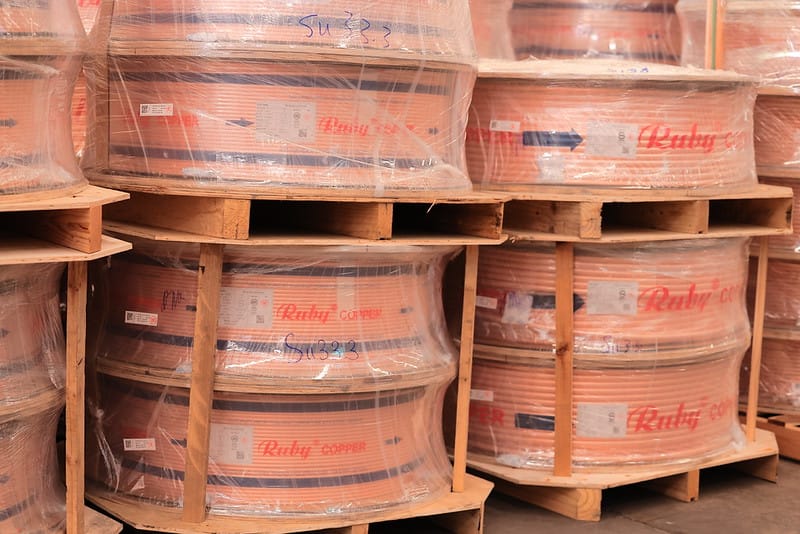
The designation C1220 also appears in Korean and Japanese standards. KSSN identifies C1220 among the phosphorus-deoxidized copper grades used for copper seamless pipes and tubes under KS D 5301-related applications.
This distinction is important for international procurement. A material designation should be evaluated together with the product standard.
C1220 vs C12200: Are They the Same?
C1220 and C12200 should not be treated as interchangeable designations without checking the applicable standard.
C1220 is used in standards such as JIS and KS. C12200 is the UNS designation used in North American material classification. Each standard can define its own chemical, mechanical, dimensional, and testing requirements.
For this reason, project specifications should identify the complete material and product standard.
C1220 Copper Tube Properties
The performance of C1220 copper tube comes from its combination of copper content and controlled phosphorus addition.
Copper Development Association data identifies C12200 as a phosphorus-deoxidized copper with a minimum copper content of 99.9%. It also reports a density of approximately 8.94 g/cm³ and electrical conductivity of about 85% IACS at 20°C.
Chemical and Physical Characteristics
The phosphorus content is a defining characteristic of C12200. The UNS database specifies phosphorus between 0.015% and 0.040%.
The material also offers good thermal conductivity. This is one reason phosphorus-deoxidized copper is widely used in heat-transfer and piping applications.
Its fabrication performance is another important advantage. Copper Development Association data rates C12200 as excellent for cold working, soldering, and brazing.
Mechanical properties depend on the product form and temper. Therefore, buyers should not apply a single tensile-strength or elongation value to every C1220 copper tube.
The required values should be checked against the applicable product standard and specified temper.
Applications of C1220 Copper Tube
C1220 copper tube is suitable for applications where reliable forming and joining performance are important.
HVAC and Refrigeration
Copper tubes are widely used in heating, ventilation, air-conditioning, and refrigeration systems.
Phosphorus-deoxidized copper is particularly relevant to tubing applications because of its fabrication and joining characteristics. Copper Development Association sources also document the use of C12200 in HVAC-related copper products.
For HVAC projects, tube selection should consider refrigerant compatibility, operating pressure, dimensions, wall thickness, cleanliness, and joining requirements.
The product standard is equally important. A tube selected for a Korean project may need to comply with KS requirements rather than only an international material designation.
Plumbing and Heat-Transfer Systems
Phosphorus-deoxidized copper is also used in plumbing and heat-transfer applications.
Its combination of corrosion resistance, thermal conductivity, and fabrication capability makes it suitable for various copper tube systems.
However, the exact application should determine the required standard and temper. A tube manufactured for one application should not automatically be specified for another.
C1220 Copper Tube Standards
Standards provide the framework for defining product requirements. They can cover material composition, mechanical properties, dimensions, tolerances, inspection, and testing.
For C1220 copper tube, three standard systems are particularly relevant to international buyers: KS, JIS, and UNS.
KS D 5301
KS D 5301 is Korea’s standard for Copper and copper alloy seamless pipes and tubes. The current edition was issued on April 22, 2024.
Its scope covers seamless copper and copper alloy tubes with a round cross-section produced through wrought processing. The 2024 revision also added air-conditioning copper tube and alloy C14435.
For suppliers targeting Korea, this standard is especially important. Buyers should verify the exact certified grade, dimensions, temper, and product scope.
JIS H 3300
JIS H 3300:2018 covers seamless copper and copper alloy tubes with a round cross-section made by wrought processing. The Japanese Standards Association currently lists the 2018 edition as valid, with confirmation dated October 20, 2023.
C1220 is one of the material designations encountered within the JIS framework. The standard also defines requirements related to inspection and material performance.
UNS C12200
UNS provides a material identification system rather than serving as a complete product specification for every tube application.
C12200 identifies phosphorus-deoxidized, high-residual-phosphorus copper. Its chemistry and selected physical and fabrication properties are documented by the Copper Development Association.
Therefore, an international buyer should distinguish between material identification and product certification.
How to Specify C1220 Copper Tube
When purchasing C1220 copper tube, specifying only the material grade is not enough.
A complete technical specification should identify:
- Applicable product standard
- Copper grade and material designation
- Outside diameter
- Wall thickness
- Temper
- Required mechanical properties
- Dimensional tolerances
- Surface and cleanliness requirements
- Testing and inspection requirements
- Certification and quality documentation
For Korean projects, buyers should also confirm whether the supplier holds a valid KS product certification covering the specific product.
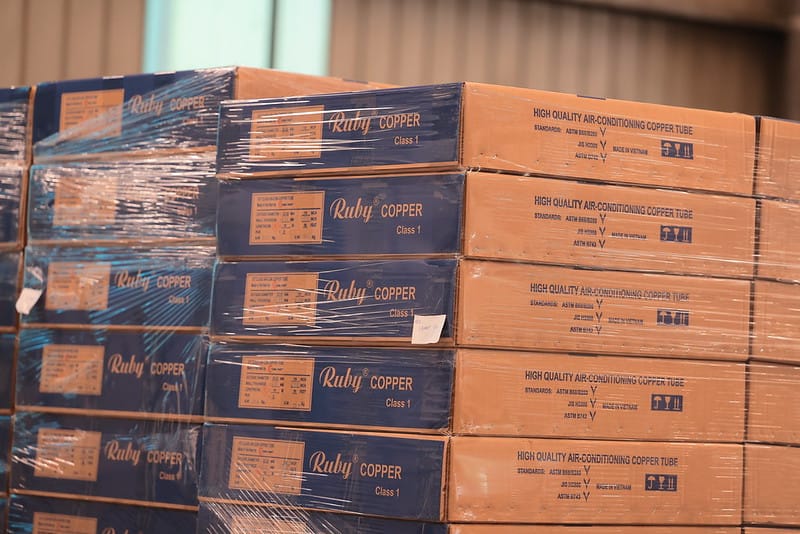
This distinction is critical. A manufacturer may produce a tube using C1220 material, but that fact alone does not prove that the product is certified to KS D 5301.
For global contractors and OEMs, the best procurement approach is to match the complete product specification with the project’s applicable standard.
Conclusion
C1220 copper tube combines high copper content, controlled phosphorus addition, good formability, and strong joining characteristics. These properties make phosphorus-deoxidized copper relevant to HVAC, refrigeration, plumbing, and heat-transfer applications.
For international procurement, material selection should go beyond the C1220 designation.
The applicable product standard, dimensions, temper, testing, and certification must also be verified. KS D 5301 is particularly relevant for projects requiring compliance with Korean requirements, while JIS H 3300 provides the corresponding Japanese framework for seamless copper and copper alloy tubes.
For contractors, OEMs, and distributors evaluating a C1220 copper tube supplier, complete technical documentation is essential. It provides a clearer basis for quality control, project approval, and long-term supply partnerships.


