
In air-conditioning and refrigeration systems, the copper tube forms an essential part of the refrigerant circuit. For professional HVAC contractors, OEMs, distributors, and engineering teams, the choice of tubing must go beyond copper as a material. Product construction, dimensions, temper, cleanliness, mechanical properties, and compliance with the applicable standard all need to be considered.
Seamless copper tubes are widely specified for applications where consistent tube construction and controlled manufacturing characteristics are required. In particular, ASTM B280-23 establishes requirements for seamless copper tube intended for the connection, repair, or alteration of field air-conditioning and refrigeration units. The standard covers specific copper grades, manufacturing requirements, mechanical properties, eddy-current testing, and cleanliness.
Understanding these requirements helps international buyers select tubing that matches the technical demands of their HVAC/R applications rather than relying only on general product descriptions.
What Are Seamless Copper Tubes?
Seamless copper tubes are manufactured without a longitudinal welded seam. Instead, copper material is processed through forming and drawing operations to produce the required tube dimensions. ASTM B280-23 specifies that the tube is cold drawn to the finished size and wall thickness for products within its scope.
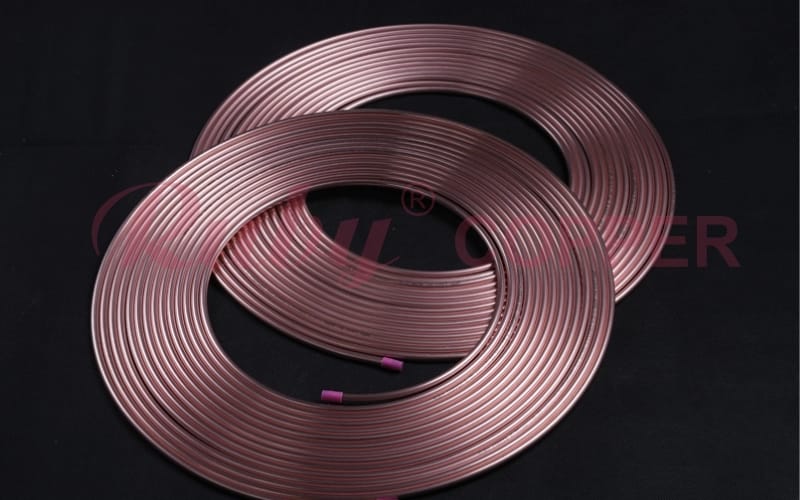
The absence of a welded longitudinal seam is one of the defining characteristics of seamless copper tubes. However, seamless construction alone does not determine whether a tube is suitable for an HVAC application. The finished product must still meet the dimensional, mechanical, cleanliness, and testing requirements established by the relevant product standard.
ASHRAE identifies ASTM B280 as the principal standard for copper tube used in air-conditioning and refrigeration service, distinguishing it from ASTM B88, which covers copper water tube and drain service. ASHRAE also notes that HVAC and refrigeration trades generally specify copper tube according to outside diameter, while ACR tubing has its own wall-thickness requirements.
This distinction is important when preparing technical specifications for international projects. A copper tube manufactured for water service should not automatically be treated as equivalent to tubing specified for ACR applications.
Why Seamless Copper Tubes Are Used in HVAC/R
One important characteristic of seamless copper tubes is their suitability for controlled manufacturing and dimensional requirements. HVAC/R systems require tubing that can be fabricated and joined according to the design and installation requirements of the project.
Copper itself offers properties that explain its extensive use in air-conditioning and refrigeration systems. ASHRAE notes that copper and copper alloys are commonly used in heating, air-conditioning, refrigeration, and water supply installations because of their inherent corrosion resistance and ease of installation.
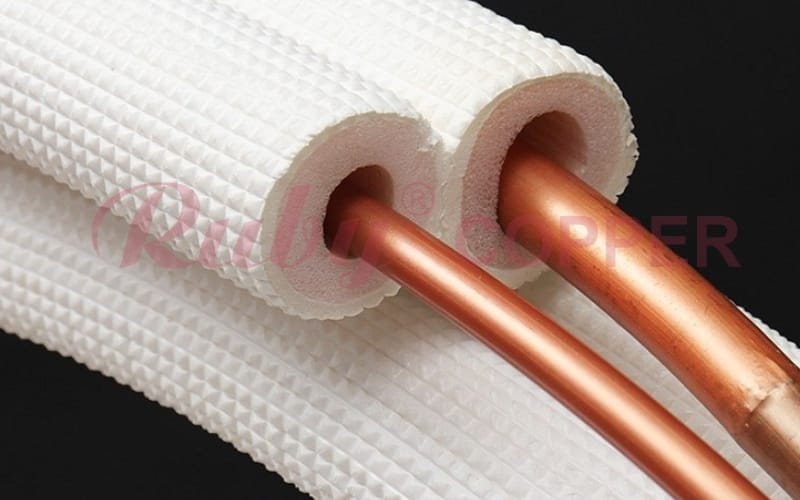
For ACR applications, however, the tube specification must address more than the base material. Outside diameter, wall thickness, temper, mechanical properties, cleanliness, and end protection are all relevant to product conformity.
ASTM B280-23 specifically permits three copper grades within its scope: UNS C10200, C12000, and C12200. These are respectively identified by ASTM as oxygen-free copper, phosphorus-deoxidized low-residual-phosphorus copper, and phosphorus-deoxidized high-residual-phosphorus copper. The applicable grade should therefore be clearly identified in a purchasing specification rather than simply described as “pure copper tube.”
Seamless Construction and Manufacturing Consistency
The manufacturing route is particularly important when evaluating seamless copper tubes for international HVAC/R supply.
A controlled production process can include raw material preparation, casting or billet production, forming, extrusion or other primary processing, drawing, heat treatment, dimensional inspection, non-destructive testing, cleaning, and packaging. The exact manufacturing route depends on the product design and manufacturer’s process.
ASTM B280-23 requires the copper material to be processed into a homogeneous and uniform wrought structure and specifies cold drawing to the finished size and wall thickness. The standard also establishes requirements for grain size and tensile properties.
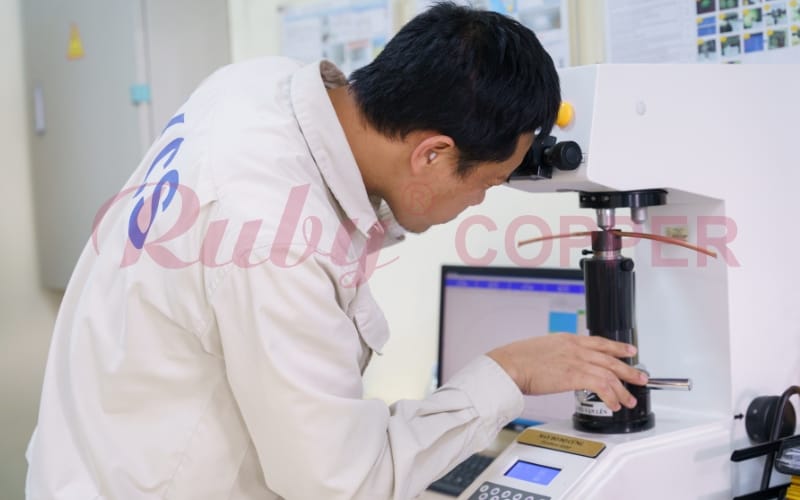
For major contractors and OEMs, manufacturing consistency is therefore a key procurement consideration. A technically suitable tube should not only meet the specification in one sample; the manufacturer should have appropriate process controls to maintain conformity across production lots.
Standards, Temper, and Cleanliness Requirements
Selecting seamless copper tubes for HVAC/R applications requires a clear understanding of the applicable product standard.
ASTM B280-23 is specifically written for seamless copper tube used in field air-conditioning and refrigeration service. It covers both soft annealed coiled tube and hard-drawn straight lengths, with different requirements for processing and end protection. Soft annealed coils are bright annealed after coiling, dehydrated, and closed at both ends. Hard-drawn straight lengths are cleaned and closed at their ends.
Temper is important because it affects how the tube behaves during fabrication. Annealed tube is generally associated with greater flexibility for forming operations, while hard-drawn tube provides different mechanical characteristics. ASHRAE notes that hard-drawn copper tubing has a higher allowable stress than annealed tubing, but when hard-drawn tube is joined by soldering or brazing, the annealed allowable stress should be considered because of the effect of the joining process.
Internal cleanliness is another critical consideration for ACR products. ASTM B280 includes cleanliness requirements and specifies end closure practices intended to protect the tubing after manufacturing. The standard also includes eddy-current testing requirements.
For international buyers, this means that evaluating seamless copper tubes should involve more than checking copper grade and dimensions. The specification should also address temper, cleanliness, testing, end protection, and documentation.
How to Select Seamless Copper Tubes for HVAC Projects
When specifying seamless copper tubes, buyers should begin with the intended application and applicable product standard.
For air-conditioning and refrigeration field service, ASTM B280-23 provides a relevant reference. The purchasing specification should identify the required copper grade, outside diameter, wall thickness, temper, tolerances, mechanical properties, cleanliness requirements, testing, and packaging.
The required dimensions should be determined by the system design rather than selected solely from commonly available commercial sizes. ASHRAE emphasizes that refrigeration and heating applications generally specify copper tube by outside diameter and that ACR tubing has different wall-thickness requirements from water tube.
The joining method should also be considered. Copper tubing in HVAC applications can be joined using soldered or brazed fittings, with the appropriate procedure depending on the system and applicable requirements. ASHRAE identifies soldering and brazing as established joining methods for copper tubing and fittings.
For large international projects, supplier evaluation should extend beyond the technical datasheet. Buyers should consider manufacturing capabilities, inspection systems, testing equipment, traceability, quality documentation, packaging, and the manufacturer’s ability to maintain consistent specifications across repeated shipments.
A supplier’s documentation should correspond to the actual product supplied. Depending on the contractual requirements, buyers may request certificates of conformity, material information, dimensional inspection records, mechanical test results, eddy-current testing records, and other relevant quality documentation.
Conclusion
Seamless copper tubes are an important product category for air-conditioning and refrigeration applications, but their suitability depends on more than their seamless construction. Copper grade, dimensions, wall thickness, temper, mechanical properties, internal cleanliness, testing, end protection, and manufacturing consistency all contribute to product conformity.
ASTM B280-23 provides a specific technical framework for seamless copper tube used in air-conditioning and refrigeration field service, while ASHRAE provides additional guidance on copper tube standards, dimensions, temper, and joining practices.
For global HVAC contractors, OEMs, distributors, and project procurement teams, the most reliable approach is to define the technical requirements clearly and evaluate manufacturers against measurable criteria. When seamless copper tubes are produced under controlled processes and supplied with appropriate testing and documentation, buyers have a stronger technical basis for evaluating product conformity and suitability for demanding HVAC/R applications.


