
In refrigeration engineering, tubing is more than a pathway for refrigerant. The tube must maintain dimensional accuracy, withstand the required service conditions, support reliable joining, and meet cleanliness requirements that are critical to the refrigeration circuit. For this reason, selecting copper tubes for refrigeration systems requires a clear understanding of copper grades, manufacturing standards, tube temper, dimensions, and internal cleanliness.
For contractors, OEMs, and international buyers, the correct specification should be established before purchasing rather than relying only on nominal diameter or general descriptions such as “refrigeration copper tube.” ASTM B280-23, for example, specifically addresses seamless copper tube for air-conditioning and refrigeration field service and establishes requirements covering materials, temper, dimensions, mechanical properties, eddy-current testing, and cleanliness.
Why Copper Is Used in Refrigeration Systems
Copper has long been used for tubing in refrigeration and air-conditioning equipment because its combination of thermal conductivity, ductility, formability, and joining characteristics is well suited to fabricated tubing systems. However, the performance of a refrigeration tube depends not only on the inherent properties of copper but also on how the tube is manufactured, finished, tested, and supplied.
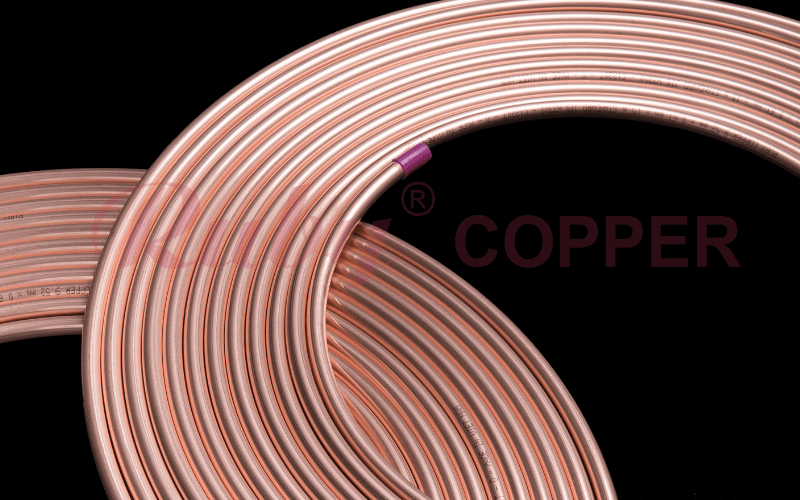
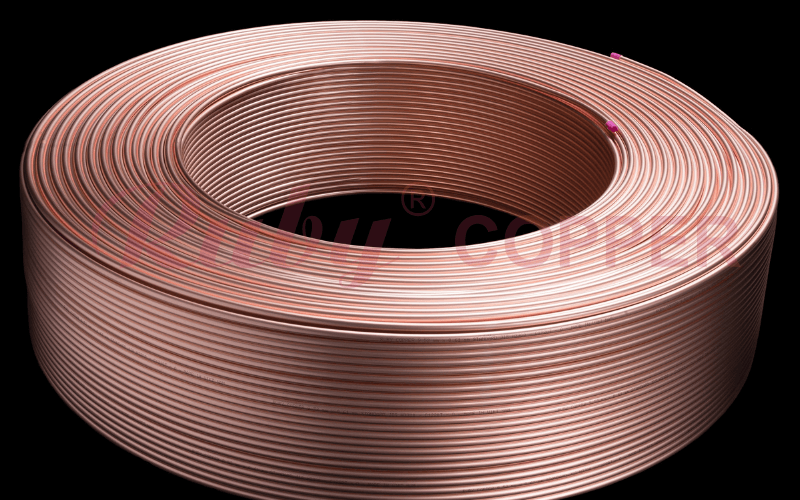
In particular, refrigeration circuits require tubing with controlled internal cleanliness. Contaminants, moisture, and particulate matter can interfere with system commissioning and operation. ASTM B280 therefore includes requirements related to cleanliness and specifies different finishing and protection practices for coiled and straight tubing. Soft annealed coils are bright annealed after coiling, dehydrated, and closed at both ends, while hard-drawn straight lengths are cleaned and closed at both ends.
This is one reason why copper tubes for refrigeration systems should not automatically be treated as interchangeable with general-purpose copper tubing. The applicable product standard and the intended service must be considered together.
Materials and Copper Grades for Refrigeration Tubes
Understanding the Copper Grade
Material selection is one of the first technical considerations when specifying copper tubes for refrigeration systems. ASTM B280-23 permits seamless tubes manufactured from UNS C10200, C12000, or C12200 copper, unless otherwise specified by the purchaser. These grades represent different copper compositions and deoxidation practices.
C10200 is classified as oxygen-free copper without residual deoxidants. C12000 is phosphorus-deoxidized copper with low residual phosphorus, while C12200 is phosphorus-deoxidized copper with higher residual phosphorus. The standard therefore provides more than one permitted copper grade rather than defining refrigeration tubing solely by the word “copper.”
For international procurement, the material designation should be stated explicitly in technical documentation. This reduces ambiguity between the buyer, manufacturer, distributor, and project engineering team. A professional specification should identify the applicable UNS grade together with the relevant product standard rather than relying on a generic material description.
Standards and Specifications for Refrigeration Copper Tubes
The most important distinction for copper tubes for refrigeration systems is the difference between a product standard and a general copper tube specification.
ASTM B280-23 is specifically titled Standard Specification for Seamless Copper Tube for Air Conditioning and Refrigeration Field Service. Its scope covers seamless copper tubes intended for connection, repair, or alteration of field air-conditioning and refrigeration units. The standard also addresses manufacturing condition, tube temper, grain size, tensile properties, eddy-current testing, and cleanliness.
By comparison, ASTM B88-22 covers seamless copper water tube for general plumbing and similar fluid-conveyance applications. Although B88 also covers copper alloys such as C12000 and C12200, its application scope is different from B280.
This distinction matters when purchasing copper tubes for refrigeration systems. A tube being manufactured from an acceptable copper alloy does not automatically mean that it complies with the requirements of a refrigeration-specific product standard. Buyers should therefore verify both the material grade and the applicable product specification.
ASTM’s current standards listing identifies B280-23 as the active specification for seamless copper tube for air-conditioning and refrigeration field service.
Tube Temper, Dimensions, and Manufacturing Quality
The physical condition of copper tubes for refrigeration systems is another important specification. Refrigeration installations can require tubing that is flexible enough to be routed and bent during installation, while other applications may require straight lengths with greater rigidity.
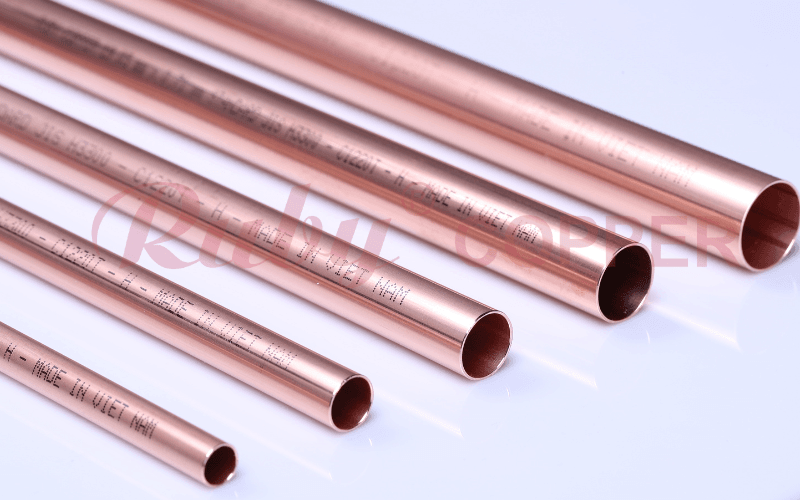
ASTM B280 distinguishes between soft annealed coiled tubing and hard-drawn straight tubing. This difference affects how the tube is handled, formed, installed, and joined. The appropriate temper should therefore be selected according to the installation method and project requirements rather than treated as a secondary purchasing detail.
Dimensions are equally important. Outside diameter and wall thickness should be specified according to the applicable standard and equipment design. For large-scale HVAC/R projects, dimensional consistency becomes particularly important because tubing interfaces with fittings, valves, heat exchangers, compressors, and other components throughout the system.
Manufacturing quality also has a direct relationship with tube reliability. A typical seamless copper tube production route may involve melting and casting, forming, cold drawing, heat treatment where required, final sizing, cleaning, inspection, and packaging. The exact production route depends on the product specification and required temper.
For copper tubes for refrigeration systems, inspection should extend beyond visual appearance. ASTM B280 includes requirements for mechanical properties, grain size, eddy-current testing, and cleanliness. These requirements provide objective criteria that can be incorporated into supplier qualification and incoming inspection procedures.
How to Specify Copper Tubes for Refrigeration Projects
For international contractors and OEM purchasing teams, a complete specification for copper tubes for refrigeration systems should contain more information than a diameter and length.
The purchase specification should identify the applicable standard, copper grade, outside diameter, wall thickness, temper, required tolerances, mechanical requirements, cleanliness requirements, testing requirements, and packaging condition. Where project specifications call for certification or inspection documentation, the manufacturer should also provide the corresponding quality records and certificates.
Internal cleanliness deserves particular attention. ASTM B280 specifically requires coiled soft-annealed tubing to be dehydrated and closed after bright annealing, while straight hard-drawn tubing is cleaned and closed before shipment. These requirements reflect the importance of protecting the internal surface of tubing intended for refrigeration service.
Buyers should also avoid selecting copper tubes for refrigeration systems solely on the basis of price. Two tubes may have similar external appearance while differing in material designation, temper, dimensional control, cleanliness, testing, and manufacturing consistency. For large projects, these differences can affect installation efficiency, quality assurance, and supplier risk.
A qualified copper tube manufacturer should therefore be able to provide clear technical documentation covering material, applicable standard, dimensions, mechanical properties, testing, cleanliness, identification, and packaging. This documentation allows engineering and procurement teams to verify that the supplied product corresponds to the project specification.
Conclusion
Selecting copper tubes for refrigeration systems requires a systematic approach that connects material selection with the applicable product standard, tube temper, dimensions, manufacturing quality, testing, and cleanliness.
ASTM B280-23 provides a dedicated specification for seamless copper tube used in air-conditioning and refrigeration field service, including requirements for permitted copper grades, manufacturing condition, mechanical properties, eddy-current testing, and cleanliness.
For contractors, OEMs, distributors, and international buyers, the key is to define the complete technical specification before placing an order. Choosing the correct copper grade and tube condition is only the beginning; consistent manufacturing, controlled cleanliness, dimensional accuracy, testing, and proper packaging are equally important.
By evaluating these factors systematically, procurement teams can make better-informed decisions when sourcing copper tubes for refrigeration systems and establish clearer technical requirements when working with qualified copper tube manufacturers.


