
Standard Air Conditioner Copper Tube Length: Installation Guide for Maximum Cooling Efficiency
When installing an air conditioning system, many homeowners focus on choosing the right brand or cooling capacity, but overlook one essential technical detail: the standard air conditioner copper tube length. In reality, the length of the copper tubing plays a major role in cooling efficiency, compressor protection, energy consumption, and the overall lifespan of the system.
Whether you are installing a residential split air conditioner or a commercial HVAC system, understanding the recommended copper pipe length helps ensure the unit operates at peak performance while avoiding costly installation mistakes.
In this guide, we will explain the standard copper tube length for air conditioners, why it matters, recommended pipe sizes, and best installation practices.
What Is the Standard Air Conditioner Copper Tube Length?
Most air conditioner manufacturers recommend that the minimum copper tube length between the indoor and outdoor units should be approximately 3 meters, or about 10 feet.
This minimum distance allows the refrigerant enough time to circulate properly and fully vaporize before returning to the compressor. When refrigerant returns as liquid instead of gas, it may place excessive stress on the compressor and reduce system reliability.
The maximum allowable copper tube length varies depending on the air conditioner model and capacity. Typical limits include:
| Air Conditioner Capacity | Recommended Maximum Copper Tube Length |
|---|---|
| 9,000–12,000 BTU | 15–20 m |
| 18,000 BTU | 20–25 m |
| 24,000 BTU | 25–30 m |
| Commercial VRF/VRV Systems | 50 m or more, depending on manufacturer specifications |
Because each air conditioner brand may have different requirements, users should always check the manufacturer’s installation manual before installation.
Why Does Copper Tube Length Matter?
Many installation problems originate from incorrect copper tubing length. Following the recommended standard offers several important benefits.

1. Achieve Maximum Cooling Performance
The refrigerant cycle is designed around a specific piping length. When the copper tubing meets the recommended standard, refrigerant pressure remains stable, heat transfer is optimized, cooling becomes faster, and the system reaches the desired temperature more efficiently.
If the piping is too short or excessively long, refrigerant flow becomes less efficient, forcing the compressor to work harder.
2. Improve Energy Efficiency
An air conditioner with correctly installed copper tubing consumes less electricity because the compressor operates under optimal conditions.
Incorrect pipe length can result in higher compressor workload, longer operating cycles, increased electricity bills, and reduced overall energy efficiency.
3. Protect the Compressor
The compressor is one of the most expensive components of an air conditioning system.
When the copper pipe is shorter than the recommended minimum, liquid refrigerant may return directly to the compressor before completely evaporating. This can lead to compressor overheating, mechanical damage, lubrication failure, and premature compressor failure.
Maintaining the correct copper tube length greatly reduces these risks.
4. Reduce Refrigerant Leakage
Proper pipe routing makes installation easier and minimizes stress o
n flare connections and brazed joints.
A correctly installed copper line helps improve sealing quality, prevent refrigerant leaks, reduce maintenance costs, and protect the environment.
5. Maintain Manufacturer Warranty
Most air conditioner manufacturers specify installation requirements in their technical documentation, including copper tube length, pipe diameter, height difference, vacuum procedure, and refrigerant charge.
Failure to follow these requirements may affect warranty coverage if compressor damage or refrigerant issues occur.
What Happens If Copper Tubes Are Too Short or Too Long?
Ignoring the recommended copper tube length can lead to several performance issues.
When the Pipe Is Too Short
- Liquid refrigerant may return to the compressor.
- The compressor experiences excessive pressure.
- Vibration and noise may increase.
- The risk of compressor failure becomes higher.
When the Pipe Is Too Long
- Refrigerant pressure may drop.
- Cooling capacity may decrease.
- The system may take longer to reach the desired temperature.
- Energy consumption may increase.
- Additional refrigerant charging may be required.
Both situations reduce overall system efficiency and may shorten equipment lifespan.
Recommended Copper Pipe Sizes for Air Conditioners
Pipe diameter is just as important as pipe length. Residential split air conditioners generally use two copper lines:
- Liquid line: the smaller copper pipe
- Suction line: the larger copper pipe
Common pipe sizes include:
| Cooling Capacity | Liquid Line | Suction Line |
|---|---|---|
| 1 HP / 9,000 BTU | 6.35 mm / 1/4″ | 9.52 mm / 3/8″ |
| 1.5 HP / 12,000 BTU | 6.35 mm / 1/4″ | 12.7 mm / 1/2″ |
| 2 HP / 18,000 BTU | 6.35 mm / 1/4″ | 12.7 mm / 1/2″ |
| 2.5 HP / 24,000 BTU | 6.35 mm / 1/4″ | 15.88 mm / 5/8″ |
Installers should always verify the required pipe diameter with the manufacturer’s specifications before installation.
Consider the Height Difference Between Indoor and Outdoor Units
In addition to pipe length, installers should also consider the vertical elevation difference between the indoor and outdoor units.
Excessive height differences can alter refrigerant pressure, reduce oil return to the compressor, lower cooling efficiency, and increase compressor wear.
This factor becomes especially important in high-rise apartments, multi-story houses, commercial buildings, and office towers. Most standard residential installations remain within the recommended height limits.
Best Practices for Copper Tube Installation
To maximize air conditioner performance, users and technicians should follow these best practices:
- Follow the manufacturer’s recommended copper tube length.
- Choose the correct copper pipe diameter.
- Avoid unnecessary bends or sharp angles.
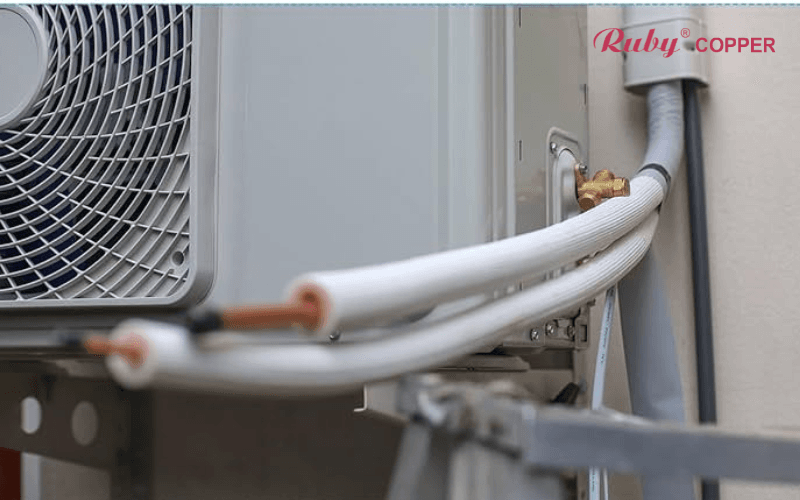
- Properly insulate the suction line.
- Perform vacuum evacuation before releasing refrigerant.
- Pressure-test the piping for leaks.
- Use high-quality refrigeration-grade copper tubing.
- Hire qualified HVAC technicians for installation.
These practices help improve reliability, reduce maintenance costs, and ensure stable cooling performance.
Frequently Asked Questions
What is the minimum copper tube length for a split air conditioner?
Most manufacturers recommend a minimum copper tube length of around 3 meters, or approximately 10 feet.
Can copper tubing be longer than recommended?
Yes, but it must remain within the manufacturer’s maximum allowable length. Exceeding this limit can reduce cooling efficiency and may require additional refrigerant charging.
Does longer copper tubing reduce cooling performance?
Excessively long copper tubing can cause pressure loss, reduce cooling capacity, and increase energy consumption.
Can I shorten the copper pipe to less than 3 meters?
In most cases, it is not recommended. Extremely short piping may increase the risk of liquid refrigerant returning to the compressor.
Conclusion
The standard air conditioner copper tube length is a critical installation requirement that directly affects cooling performance, compressor protection, energy efficiency, and long-term reliability.
By selecting the correct copper tube length, using the proper pipe diameter, and following manufacturer installation guidelines, homeowners and HVAC professionals can ensure that the air conditioning system operates safely and efficiently for many years.
Whether you are installing a new residential air conditioner or designing a commercial HVAC system, investing in proper copper tube installation from the beginning helps prevent expensive repairs and improves overall system performance.


