
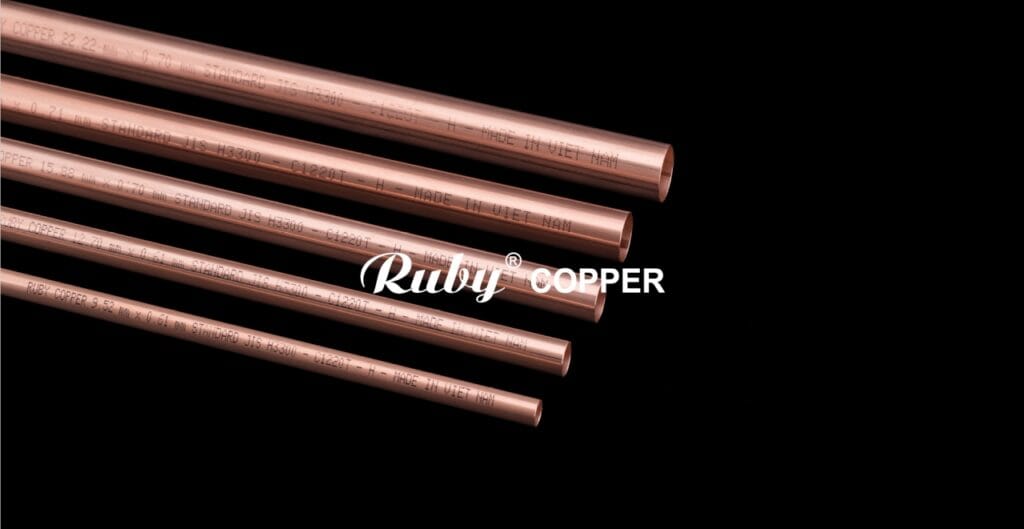
A straight copper tube is one of the most widely used products in HVAC, refrigeration, plumbing, and industrial piping systems. But what exactly is a straight copper tube, and what should installers consider during installation?
In this article, Ruby Copper explores the applications, advantages, and installation considerations of the straight copper tube to help contractors, technicians, and project owners achieve optimal system performance.
I. What Is a Straight Copper Tube?
A straight copper tube, also known as a rigid copper tube, is manufactured in straight lengths rather than coils. Standard lengths typically range from 2 to 6 meters, while common diameters used in Vietnam range from Ø4.76 mm to Ø41.28 mm.
The straight copper tube plays an important role in the installation of refrigeration and air conditioning systems in factories, residential buildings, office towers, hotels, and commercial projects.
In addition to HVAC applications, straight copper tubes are widely used to manufacture refrigeration fittings such as elbows, tees, couplings, and valves.
In many developed countries, the straight copper tube is also extensively used in potable water distribution systems, heating systems, and gas supply networks for residential and commercial buildings.
II. Types of Straight Copper Tube Available in Vietnam
According to market data, Ruby Copper is one of the leading suppliers of straight copper tube products in Vietnam. Its products are trusted by experienced HVAC technicians, distributors, and contractors due to their consistent quality and compliance with international standards.
Ruby Copper products comply with numerous international specifications, including:
- ASTM B280
- ASTM B68
- ASTM B88
- EN 12735
- AS/NZS 157
- JIS H3300
Ruby Copper manufactures every straight copper tube using high-purity Class 1 copper cathodes containing at least 99.95% copper. Combined with advanced manufacturing technology, this ensures excellent product consistency and performance.
The company’s modern production facilities allow it to offer a wide range of tube diameters, wall thicknesses, lengths, and temper conditions suitable for various international markets, including Japan, the United States, Europe, and Australia.
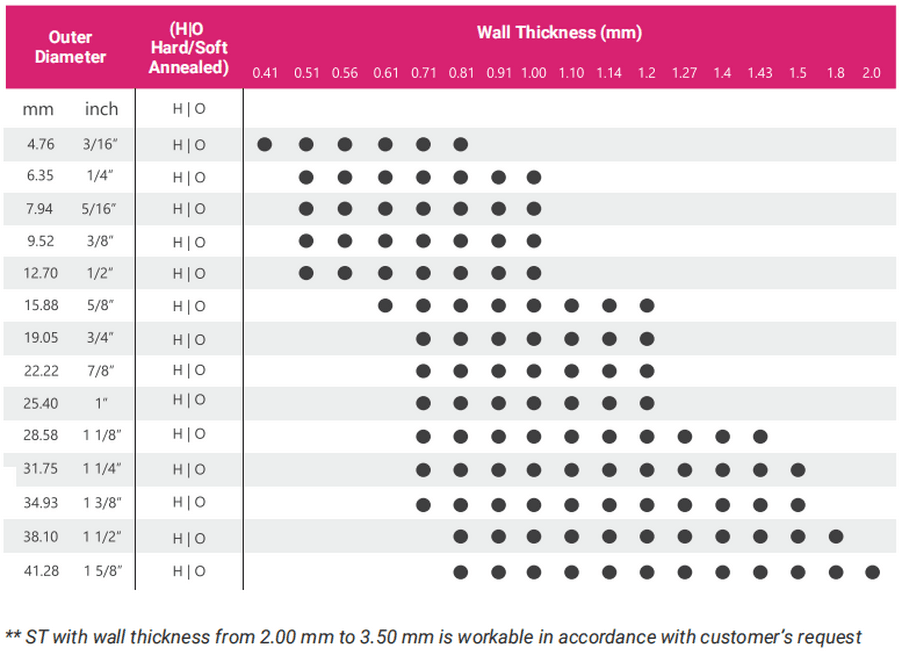
Beyond standard products, Ruby Copper can also manufacture customized straight copper tube solutions to meet specific customer requirements regarding dimensions, hardness, and technical specifications.
As a leading manufacturer serving the construction, medical, and industrial sectors, Ruby Copper operates large-scale factories around the clock to satisfy growing domestic and international demand.
III. Important Considerations When Installing Straight Copper Tube
Installing a straight tube requires technical expertise, precision, and compliance with safety standards. Proper installation helps ensure reliable system operation and long service life.
1. Tube Bending
In refrigeration, air conditioning, plumbing, and gas distribution systems, piping routes rarely remain perfectly straight. Therefore, installers often need to bend the copper tube on-site to accommodate project layouts.
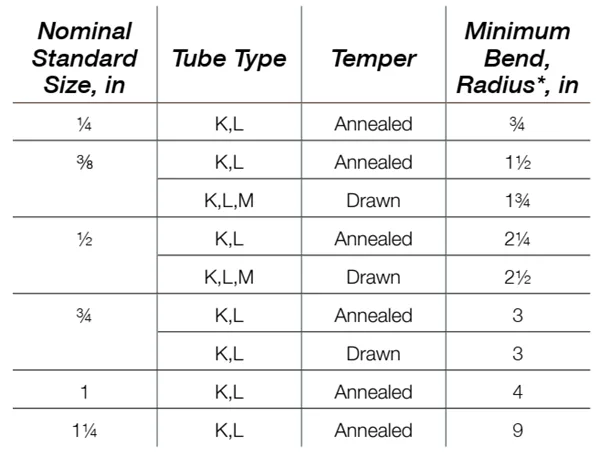
Proper bending prevents tube collapse, wrinkling, or deformation at the bend radius, ensuring unrestricted fluid flow and efficient system performance.
Preparation
Before bending, installers should prepare:
- Appropriate tube bending tools
- Correct bending radius
- Suitable tube temper condition
These factors help achieve accurate bends while maintaining tube integrity.
Bending Operation
After selecting the correct tools and bending specifications, technicians can proceed with the bending operation according to industry best practices.
2. Tube Joining Methods
Various joining methods can be used depending on system requirements and operating conditions.
Common methods for connecting straight tube sections include:
Heat-Based Joining
- Brazing
- Soldering
Mechanical Joining
- Flared joints
- Roll-groove joints
- Press-connect joints
- Push-connect joints
- T-drill joints (Extruded outlets)
Each joining method requires specialized tools, fittings, and installation techniques.
When working with heat sources, brazing materials, and fluxes, installers should always wear appropriate personal protective equipment and use high-quality tools and accessories to ensure safety and reliability.
IV. Why Choose Ruby Copper Straight Copper Tube?
Ruby Copper continuously invests in advanced manufacturing technologies and quality-control systems to ensure every tube meets stringent international requirements.
Key advantages include:
- High-purity copper cathode raw materials
- Excellent dimensional accuracy
- Smooth and bright surface finish
- Easy installation and processing
- Compliance with major international standards
- Consistent quality across production batches
These advantages make the straight copper tube from Ruby Copper a preferred choice for contractors, distributors, and industrial customers both in Vietnam and overseas.
Conclusion
The straight copper tube remains one of the most important components in HVAC, refrigeration, plumbing, and industrial piping systems. Choosing a high-quality straight copper tube and following proper installation practices can significantly improve system performance, reliability, and service life.
With advanced manufacturing technology, strict quality control, and extensive production capabilities, Ruby Copper continues to supply premium straight copper tube products that meet the demands of customers worldwide.


