
What Is Level Wound Coil?
In the HVAC and refrigeration industry, copper tubing plays a critical role in heat transfer efficiency, system reliability, and manufacturing productivity. Among the various copper tube formats available today, the Level Wound Coil (LWC) has become one of the most widely used solutions for air conditioning, refrigeration, heat pump, and commercial HVAC applications.
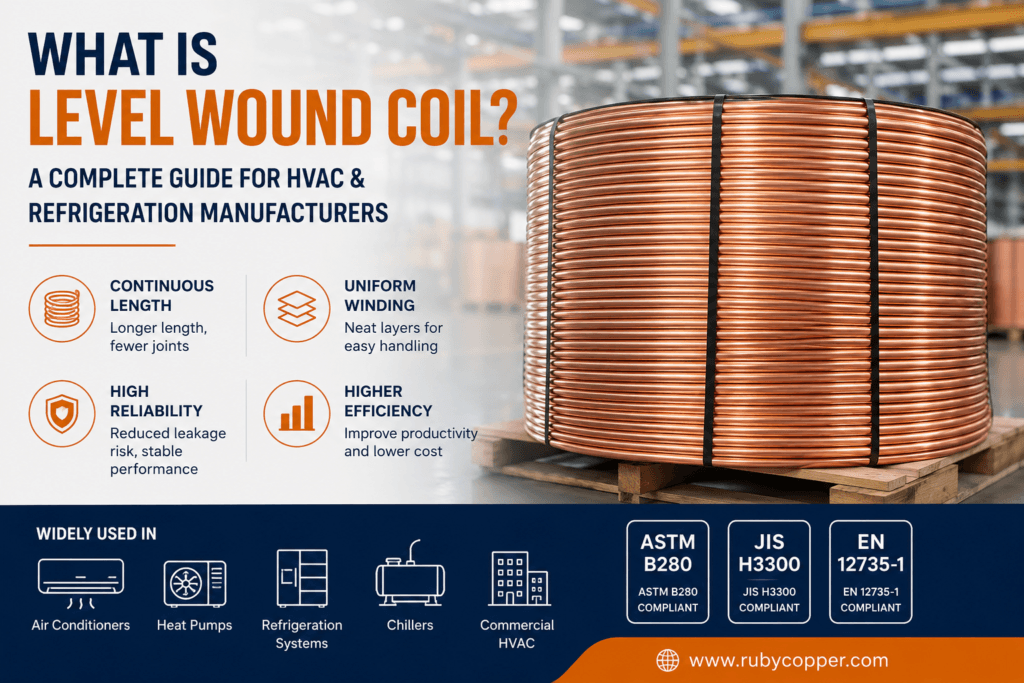
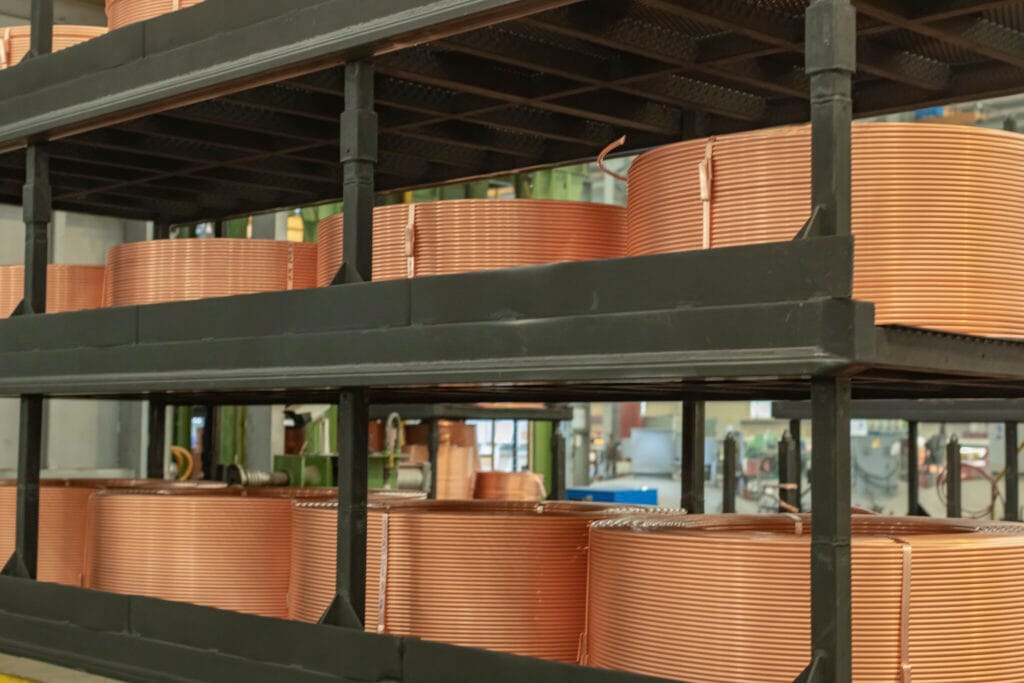
A Level Wound Coil, also known as a Level Wound Copper Coil, is a continuous length of copper tubing wound in evenly layered rows to form a compact and organized coil. This winding structure improves handling, transportation, storage, and automated manufacturing processes.
As HVAC manufacturers increasingly focus on production efficiency and quality consistency, LWC copper coils have become the preferred choice for many OEM and ODM manufacturers worldwide.
In this guide, we will explore the structure, specifications, applications, advantages, and international standards of Level Wound Copper Coils.
What Is a Level Wound Copper Coil?
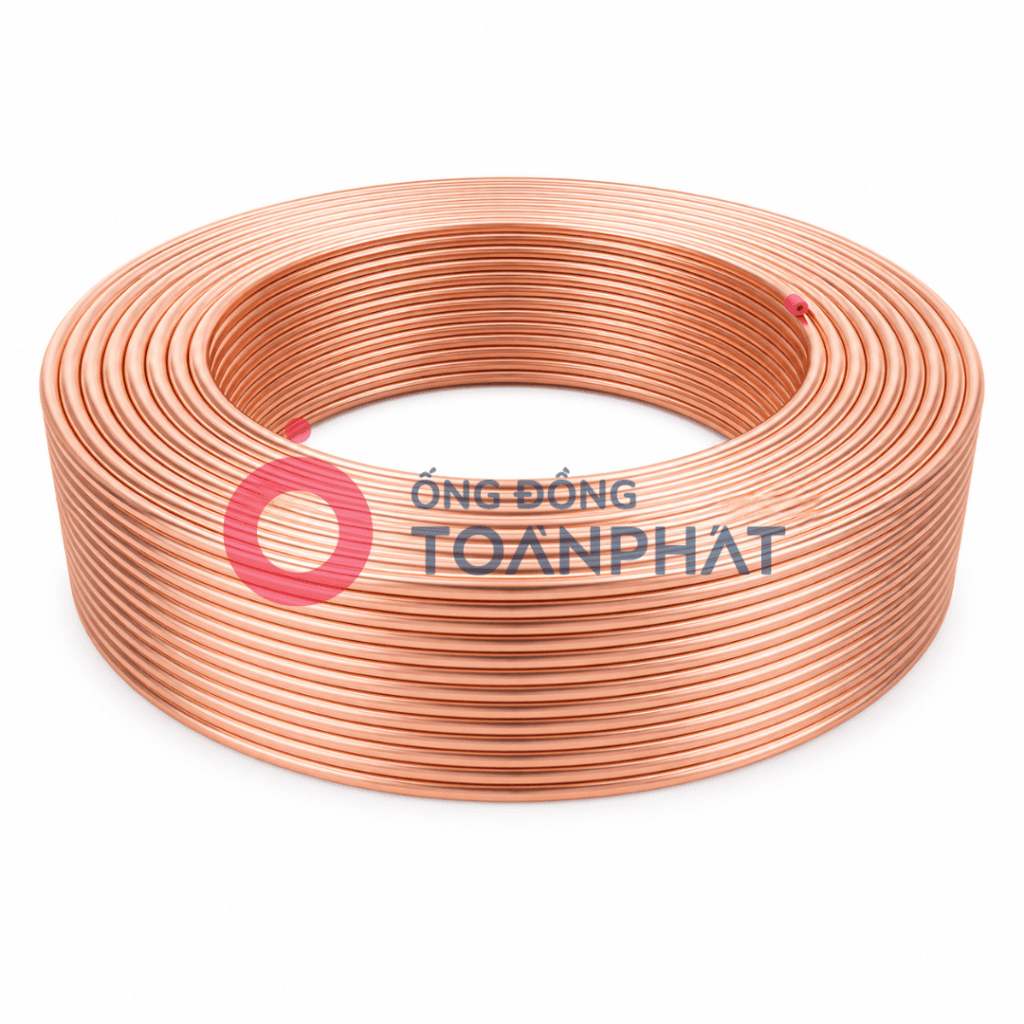
A Level Wound Copper Coil (LWC Coil) is a seamless copper tube wound layer by layer in a uniform pattern.
Unlike conventional random-wound coils, every layer is positioned precisely, creating a stable and compact coil shape. This organized winding structure allows manufacturers to handle longer tube lengths while reducing tangling, deformation, and production interruptions.
Because the tubing is supplied in continuous lengths, Level Wound Coils help reduce the number of joints required during assembly and installation.
This results in:
- Faster manufacturing processes
- Lower labor costs
- Reduced refrigerant leakage risks
- Improved system reliability
For these reasons, LWC copper coils are widely used in modern HVAC and refrigeration manufacturing.
Key Characteristics of Level Wound Copper Coils
Continuous Length
Level Wound Copper Coils are available in long continuous lengths, allowing manufacturers to minimize production downtime and increase throughput.
Uniform Winding Structure
The tubing is wound in precise layers, ensuring better stability during transportation, storage, and processing.
Excellent Formability
Most LWC products are supplied in annealed condition, providing excellent flexibility and bendability without cracking.
High Internal Cleanliness
HVAC and refrigeration systems require extremely clean copper tubing to prevent contamination of compressors and refrigerants.
High-quality LWC coils undergo strict cleaning and quality control procedures to ensure internal cleanliness.
Consistent Dimensions
Manufacturers maintain tight tolerances on:
- Outside diameter (OD)
- Wall thickness
- Coil dimensions
- Mechanical properties
This consistency is critical for automated manufacturing lines.
Common Sizes and Specifications of LWC Copper Coils
Level Wound Copper Coils are available in a wide range of dimensions to suit different HVAC and refrigeration applications.
| Outside Diameter (OD) | Typical Application |
|---|---|
| 1/4″ (6.35 mm) | Split Air Conditioners |
| 3/8″ (9.52 mm) | Residential HVAC |
| 1/2″ (12.70 mm) | Heat Pumps |
| 5/8″ (15.88 mm) | Commercial HVAC |
| 3/4″ (19.05 mm) | Refrigeration Systems |
| 7/8″ (22.22 mm) | Industrial Cooling |
Depending on customer requirements, wall thickness and coil length can be customized according to ASTM, JIS, or other international standards.
Level Wound Coil vs Conventional Copper Coil
Many buyers ask about the difference between a Level Wound Coil and a conventional copper coil.
The table below highlights the key differences:
| Feature | Level Wound Coil | Conventional Coil |
| Winding Structure | Uniform layered winding | Random winding |
| Handling | Easy | More difficult |
| Storage Efficiency | High | Moderate |
| Production Efficiency | High | Lower |
| Automation Compatibility | Excellent | Limited |
| Transportation | Safer and more compact | Less efficient |
For large-scale HVAC manufacturers, the productivity benefits of Level Wound Copper Coils often outweigh the initial material cost differences.
Why HVAC Manufacturers Use Level Wound Coils
The growing popularity of LWC copper coils is driven by several operational advantages.
Fewer Brazing Joints
Long continuous tube lengths reduce the number of required connections.
This helps minimize potential leakage points in HVAC systems.
Higher Manufacturing Productivity
Continuous feeding improves workflow efficiency and reduces machine downtime.
Reduced Material Waste
Fewer tube connections result in lower scrap rates and improved material utilization.
Better Compatibility with Automated Production
Many HVAC factories use automated tube processing equipment that performs best with Level Wound Coils.
Lower Total Production Cost
By reducing labor, scrap, and assembly time, LWC products help manufacturers lower overall production costs.
Applications of Level Wound Copper Coils
Residential Air Conditioners
Used extensively for refrigerant lines in split and multi-split AC systems.
Commercial HVAC Systems
Applied in office buildings, shopping centers, hotels, and large commercial facilities.
VRF and VRV Systems
The long continuous length of LWC helps reduce joints in complex piping networks.
Refrigeration Equipment
Widely used in cold storage, food processing, refrigeration units, and freezers.
Heat Pump Systems
Copper tubing ensures efficient refrigerant transportation and heat transfer.
Chillers
Commonly used in commercial and industrial chiller systems requiring reliable performance.
Industrial Cooling Systems
Suitable for process cooling applications where durability and efficiency are essential.
International Standards for Level Wound Copper Coils
Quality Level Wound Copper Coils are typically manufactured according to internationally recognized standards.
ASTM B280

ASTM B280 is one of the most widely accepted standards for seamless copper tubes used in air conditioning and refrigeration systems.
It covers:
- Chemical composition
- Mechanical properties
- Dimensional tolerances
- Internal cleanliness
- Pressure resistance
Many global HVAC brands require ASTM B280-compliant copper tubing.
JIS H3300

JIS H3300 is a Japanese standard that specifies requirements for copper and copper alloy tubes.
The standard includes:
- Material quality
- Dimensional tolerances
- Mechanical properties
- Inspection requirements
JIS-compliant products are widely used throughout Asia.
EN 12735-1

Many European markets also require compliance with EN 12735-1 for copper tubes used in refrigeration and air conditioning systems.
How to Choose a Reliable Level Wound Coil Supplier
When sourcing LWC copper coils, buyers should evaluate several factors.
Manufacturing Capacity
Can the supplier meet your volume requirements consistently?
Quality Control System
Does the supplier maintain strict testing and inspection procedures?
Compliance with International Standards
Can the supplier provide ASTM B280, JIS H3300, or EN standard products?
Export Experience
Does the supplier have experience shipping products to global markets?
Technical Support
Can the supplier provide engineering assistance and product recommendations?
Selecting the right Level Wound Copper Coil supplier can significantly reduce procurement risks and improve long-term supply reliability.
Frequently Asked Questions
What is a Level Wound Coil?
A Level Wound Coil is a seamless copper tube wound in uniform layers to create a compact and organized coil for HVAC and refrigeration applications.
What is the difference between LWC and Pancake Coil?
LWC products are wound in large, layered coils for manufacturing efficiency, while Pancake Coils are typically supplied in smaller coils for installation and field applications.
Is a Level Wound Coil suitable for HVAC systems?
Yes. Level Wound Copper Coils are widely used in residential, commercial, and industrial HVAC systems because of their efficiency and reliability.
Which standards apply to Level Wound Copper Coils?
The most common standards include ASTM B280, JIS H3300, and EN 12735-1.
Conclusion

Level Wound Copper Coil is one of the most important copper tube formats used in today’s HVAC and refrigeration industry.
Its continuous length, uniform winding structure, excellent formability, and compliance with international standards make it an ideal choice for air conditioning systems, refrigeration equipment, heat pumps, and industrial cooling applications.
As HVAC manufacturers continue to focus on efficiency, quality, and cost optimization, Level Wound Copper Coils will remain a key component in modern cooling technologies.
For companies seeking reliable copper coil solutions, choosing a qualified manufacturer with strong quality control and export experience is essential for long-term success.


