
Air conditioners are essential appliances in modern life. To operate effectively, they rely on the combined function of the outdoor unit, indoor unit, and refrigerant piping system. Copper tubes in air conditioning systems are the primary material used in all three components, making them critical to cooling performance and durability.
I. What Is an Air Conditioner?
An air conditioner, also known as an air conditioning system, is an electrical device designed to remove heat and humidity from indoor spaces, creating a more comfortable environment for occupants.
In residential applications, consumers commonly use:
- Cooling-only air conditioners, which provide cooling functions only.
- Heating and cooling air conditioners, which can both cool and heat indoor spaces.
For larger facilities such as office buildings, commercial complexes, and urban developments, engineers install more advanced HVAC systems to manage indoor climate and energy consumption efficiently.
These systems may include:
- Distributed air conditioning systems, which use multiple indoor units installed in different locations to distribute conditioned air more evenly.
- Unitary air conditioners, consisting of individual standalone units serving specific areas.
- Central air conditioning systems, where temperature and humidity are controlled at a central location before conditioned air is distributed through ductwork.
Beyond comfort cooling, air conditioning systems are also used for specialized applications, such as humidity control in data centers, museums, and art galleries.
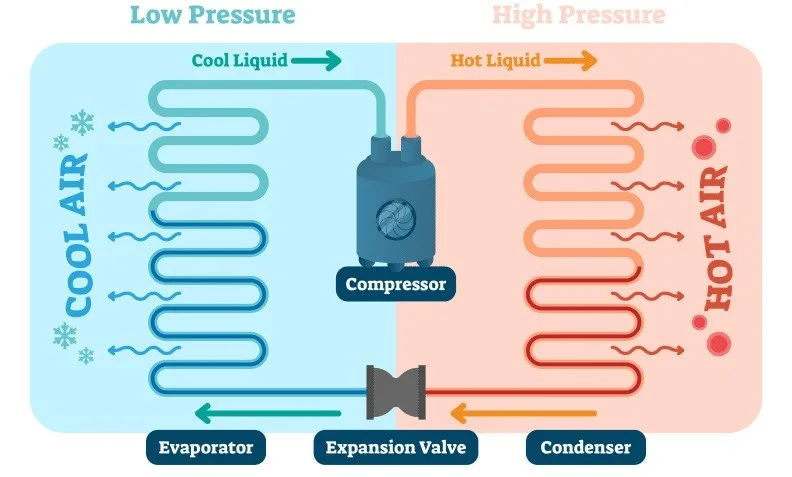
As modern lifestyles continue to evolve, air conditioning has become one of the most important household and commercial technologies. The performance of these systems depends heavily on the quality of the copper tubes in air conditioning applications.
II. How Does an Air Conditioner Work?
In tropical countries such as Vietnam, air conditioners primarily operate using the vapor-compression refrigeration cycle.
In this process, refrigerant continuously circulates through equipment and piping to transfer heat by changing its physical state. There are four main stages:
1. Condensation Stage
The compressor increases the refrigerant pressure from approximately 118 psi to 400 psi. At this point, the refrigerant is a high-temperature gas.
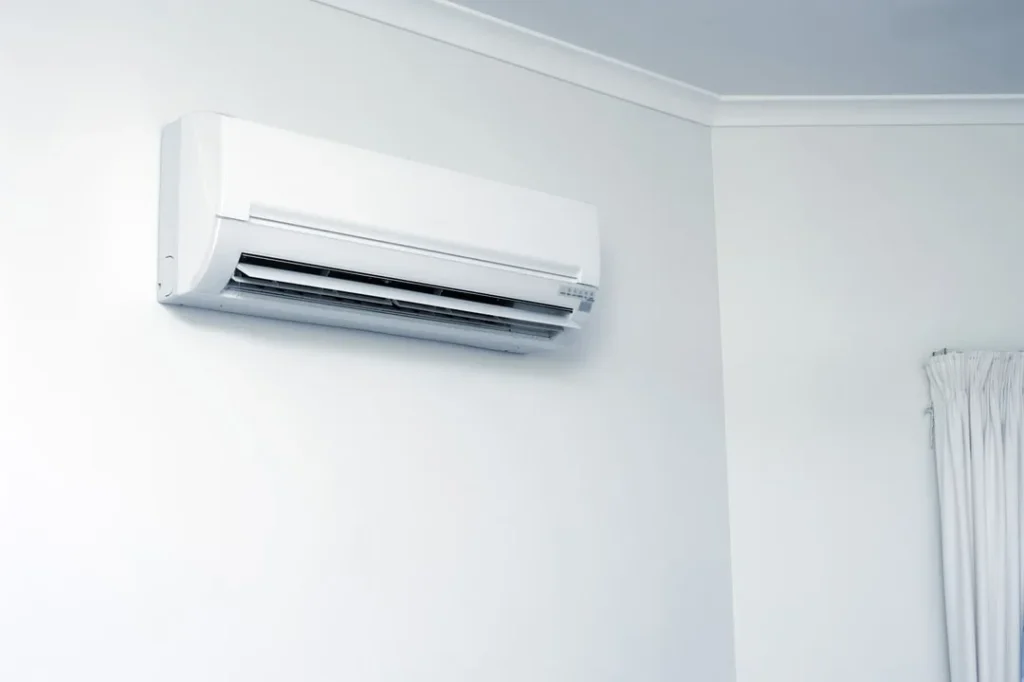
As it passes through the condenser, heat is released to the surrounding environment, causing the refrigerant to condense into a liquid.
2. Expansion Stage
Although the refrigerant is now liquid, it remains at high pressure.
When it passes through the expansion valve, the pressure drops suddenly. The refrigerant partially evaporates and cools significantly, becoming a low-pressure, low-temperature refrigerant ready for the evaporation stage.
3. Evaporation Stage
The refrigerant enters the evaporator, a heat exchanger consisting of multiple coiled copper tubes in air conditioning systems.
Inside the evaporator, the refrigerant absorbs heat from the surrounding air. This heat absorption process lowers indoor air temperature and creates the cooling effect experienced by users.
4. Compression Stage
After leaving the evaporator, the refrigerant exists as a low-pressure vapor.
It returns to the compressor, where the refrigeration cycle begins again.
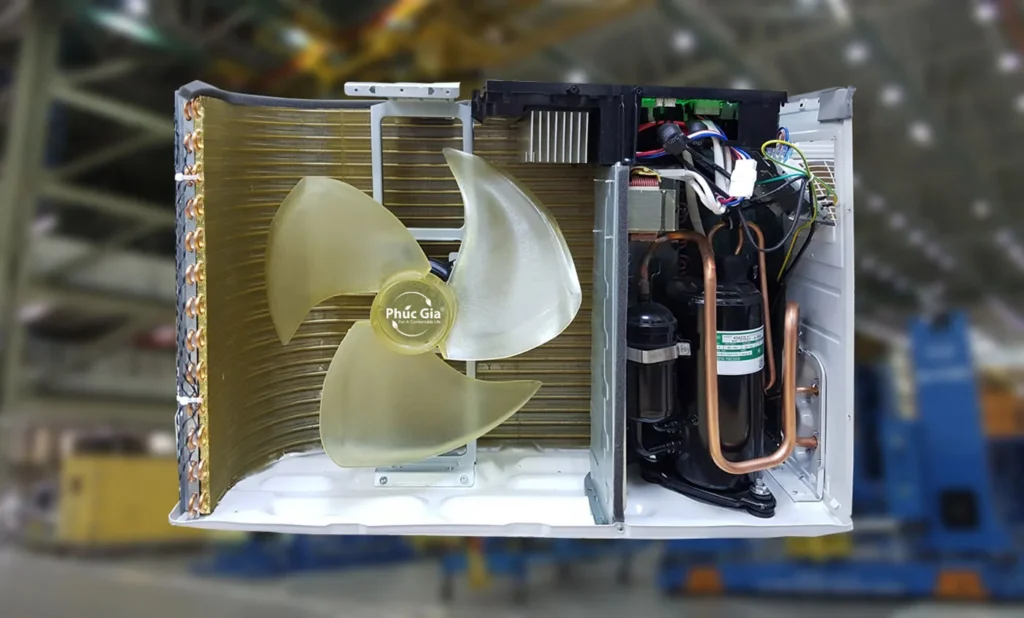
Thanks to the condenser, evaporator, expansion valve, and high-quality copper tubes in air conditioning systems, air conditioners can effectively cool indoor environments and provide comfort during hot weather.
III. The Role of Copper Tubes in Air Conditioning
Copper tubes in air conditioning systems serve as the primary component of both the condenser and evaporator coils. In addition, they connect the indoor and outdoor units, allowing refrigerant to circulate continuously throughout the system.
Indoor Unit (Evaporator)
The evaporator, commonly referred to as the indoor unit, is installed inside the room being cooled.
Its most common design consists of multiple layers of bent copper tubes in air conditioning systems combined with dense aluminum fins. This structure maximizes heat transfer efficiency and cooling performance.
Outdoor Unit (Condenser)
The condenser, commonly called the outdoor unit, is installed outside the building and releases heat into the surrounding environment.
Like the evaporator, it consists of multiple layers of copper tubes in air conditioning equipment combined with high-density aluminum fins to improve heat dissipation.
Refrigerant Copper Tubes
While the indoor and outdoor coils are protected by aluminum fins and durable housings, the refrigerant piping itself is more exposed.
Therefore, copper tubes in air conditioning installations are typically covered with thick rubber insulation to protect them from environmental damage and energy loss.
During installation or operation, copper tubes may become dented, damaged, or develop leaks. These issues can directly affect cooling performance, energy efficiency, and system lifespan.
For this reason, proper installation practices and the use of high-quality copper tubes in air conditioning systems are essential.
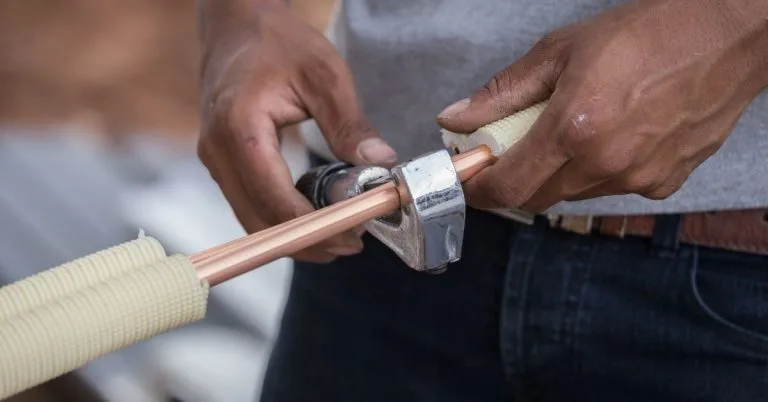
Consumers and HVAC technicians should always choose genuine products that are compatible with the refrigerant being used. Low-cost, unverified copper tubes may compromise system performance and reliability.
As a trusted manufacturer, Ruby Copper supplies premium copper tubes in air conditioning applications that meet stringent quality standards, helping ensure efficient heat transfer, long service life, and reliable operation for modern HVAC systems.
The importance of copper tubes in air conditioning systems cannot be overstated. They are fundamental to refrigerant circulation, heat exchange, and overall system efficiency, making them one of the most critical components in every air conditioning installation.


